Showing posts with label Indian Territory. Show all posts

Wednesday, November 11, 2020

How Mamma Came to Indian Territory


Cora, Tom and Ada Rosser

I just have just a few pieces of information about how Mamma’s[i] family came from Arkansas to Indian Territory.

When the Rossers started west from Georgia after the Civil War, they had intended to join Grandpa’s brother Ed in Texas, but circumstances changed. Their oldest daughter Cora married a man in Marvell, Arkansas, near Palmer Station, where they were living, and Grandpa was elected magistrate, so they stayed for a while, 7 years, but something else happened that caused them to change their plans.

Mamma’s mother, Emily Bass Rosser, was expecting a large inheritance from her father in Alabama, but when word of Emily’s father’s death finally came, the inheritance turned out to be only a few gold coins, the equivalent of about $50, so they realized they were on their own.

I have no proof of it, and no one is left for me to ask, but I think Grandpa might have been influenced by my mother’s other grandfather, Sam Paul, a Chickasaw Indian. Sam Paul, was a “Progressive” among the Chickasaws, favoring the influx of white settlers, and according to some notes made by my uncle Haskell, he made trips to Arkansas and also to Texas to invite settlers to come to Indian Territory. Of course this scared the be-Jesus out of the more traditional full-bloods, or “Pull Backs.” They were used to living in a communal style, sharing land and other resources among themselves, and just wanted to be left alone.

Sam Paul, probably influenced more by his more ambitious father, Smith Paul, a Scotsman, thought the Indians could make money by renting their land to settlers, and could also benefit from the businesses and “civilization” the white men brought. He was also a politician, popular among the intermarried white citizens, and leader of the Chickasaw “Progressive” party.

Anyway, I wonder if Grandpa Rosser was persuaded to come to Indian Territory by one of Sam Paul’s talks. If the farm land in the Washita River valley was as good as Sam Paul claimed, maybe Grandpa could to provide for his four remaining daughters until they were married and independent. Ada, their youngest was only 9 (est.) Mamma was 11.

Mamma told about coming to Indian Territory with her family in an interview in 1937: [ii]

I came to the Indian Territory with my father and mother. We were moving from Mississippi to the Indian Territory in wagons, working horses and oxen in 1889. I was eleven years old. I remember people telling my father that he would have to be on the lookout for horse thieves. We had some trouble while crossing Arkansas, but after we crossed into the Indian Territory we never were bothered by anyone. My father would buy feed from the Indians and they were the most accommodating people I ever met. We came through Muskogee but there wasn't much of a town there then. At that time there were but few roads and at times it looked as if it would be impossible to go any farther. After several months of traveling over rough country we located at Pauls Valley. My Father traded the ox team, a tent and a few horses to Mr John Burks for a lease that had a two room log house on it. This lease had never been worked but there was a plowed furrow around it. My father and brother began putting this prairie land in cultivation. There was open range at that time, and you could have all the hogs and cattle you wanted to own, but you had to have your brand and mark on them. 

There was an Indian law at that time between the Choctaw and Chickasaw Indians that if anyone's cattle grazed over on the other's territory the person owning the cattle would be tried by the Indian laws and given the death sentence. They would carry out this sentence too but when anyone was given the death penalty for some crime under the Indian law he would be given an honor parole for a certain time in order to visit his family and straighten up his affairs. Then on the day set for him to die, this person would be at the place set and right on time. 

It cost five dollars a year permit for a family to live in the Indian Territory and two dollars and fifty cents for a single man. There would be collectors come around and collect this fee and if the collectors did not turn in all that he had collected then he would be tried under the Indian law and given so many lashes across the back. They had a whipping post at the place where the court was held. 

The Choctaws held court at Eagle Town and the Chickasaws held court at Tishomingo. 

I have heard my husband say he went to school at Cherokee town[iii] and at that time there was a church there. It was called a community church. My husband was Bill Paul, Sr., a grandson of Smith Paul, the man for whom Pauls Valley was named. 

Amos Waite built the first schoolhouse in Pauls Valley and it was a subscription school.[iv] A Mr Mackey taught this school. My father lived southwest of Pauls Valley about six miles, and my sister and I had to come to Pauls Valley to school. There were several children who lived in this community who had to come to Pauls Valley to school, so my father and several other men bought a frame building at Pauls Valley and moved it to this community. They made a school building out of it and this school was called Red Branch school. Today it is called Klondike. 


[i] I’ll refer to my ancestors the way my mother did, since she’s my main source of information.

[ii] Indian Pioneer papers: Indian Pioneer History Project for Oklahoma. 9/14/37. Mrs Victoria Paul, Pauls Valley Okla, Date of birth 1878. Mississippi, Father JT Rosser, born in Va, Mother Emily Bass, born in Alabama, Interview 8492 by Maurice R Anderson. OKGenWeb @ rootsweb.com

[iii] It’s interesting how Cherokee Town got its name. After Texas won its independence from Mexico, they attackedand destroyed a large settlement of Cherokees. Sam Houston, incidentally, who had been adopted by the Cherokees, tried unsuccessfully to intervene. The Cherokee families, driven from their homes, made the long journey to join their kin in the northern part of Indian Territory. On their way, they camped for a while just north of the future site of Pauls Valley. Later a small town sprung up there and it was called Cherokee Town, in their honor.

[iv] The Waites are our cousins and a quite remarkable family. My mother’s paternal g-grandmother, Ela-teecha, a full blood Chickasaw Indian, was born back in the Chickasaw homeland, near what is now Tupelo, Mississippi. Her first husband was a Scottish missionary, Jason McClure, with whom she had two children, Tecumseh and Catherine. McClure died in Indian Territory after the trail of tears, and Ela-teecha remarried, the second time to my mother’s g-grandfather, Smith Paul. Anyway, Tecumseh was quite prominent, serving for a time as Chickasaw Governor. Unlike his half brother Sam Paul, he was in the Pull Back political party and opposed white settlement. He also favored setting aside tribal land as a wildlife preserve. Catherine, Ela-teecha’s other child by McClure, married a white man, Tom Waite, who like many others, had come to Indian Territory seeking land. They had eight children together, two boys and six girls, and all were college educated. I think that is remarkable, not just that they were able to do it, but that they valued education that much. Tom Waite died in 1874 and Catherine actually moved to Ohio so that her daughters would have access to an education. Amos, as noted above, started the first school in Pauls Valley, and his brother Fred was Speaker of the Chickasaw House of Representatives, and Attorney General for the tribe. 


Wednesday, November 23, 2011

The Mississippi Choctaw


Family of Mississippi Choctaws Dressed in Traditional Clothing
1908

For the Five Civilized Tribes, the time of the allotment process was similar to their Removal in the suffering and injustices that were inflicted on them. I can't begin to list all the examples of greed, prejudice and cruelty that have been recorded, but perhaps a few examples will give you a feeling for the period. The first story I want to tell concerns the "Mississippi Choctaw." 

In the Choctaw removal treaty of 1830, The Treaty of Dancing Rabbit Creek, the Choctaw were given the option of remaining in Mississippi and subjecting themselves to the white man's laws, or of removing to Indian Territory. Much to the surprise and disappointment of the Mississippi whites, about 1/3 of the tribe decided to stay in their homeland. According to the treaty they were to be given allotments and U.S. citizenship. In an attempt to force the recalcitrants to remove, the Choctaw agent in Mississippi, William Ward, neglected to file the Choctaws' applications for allotment, and when they complained he threatened them. Meanwhile white settlers overran the Choctaw land, and drove the people from their homes with or without a legal deed.  

Each year after the official removal, which took place in 1832, more and more Choctaws migrated west to join their relatives in Indian Territory. Over the years the federal government and also the Choctaw Nation sent several delegations to visit the Mississippi Choctaws to convince them to join their brethren in Indian Territory, but these efforts met with only limited success.  

The following is an excerpt from a reply given by Chief Cobb of the Mississippi Choctaws in 1843 to Capt. J. J. McRae, during a visit with tribal leaders urging them to move to Indian Territory. 

Brother: When you were young we were strong; we fought by your side; but our arms are now broken. You have grown large. My people have become small.

Brother: My voice is weak; you can scarcely hear me; it is not the shout of a warrior but the wail of an infant. I have lost it in mourning over the misfortunes of my people. These are their graves, and in those aged pines you hear the ghosts of the departed. - Their ashes are here, and we have been left to protect them. Our warriors are nearly all gone to the far country west; but here are our dead. Shall we go too, and give their bones to the wolves?

……….

Brother: Our hearts are full. Twelve winters ago our chiefs sold our country. Every warrior that you see here was opposed to the treaty. If the dead could have counted, it could never have been made, but alas! though they stood around, they could not be seen or heard. Their tears came in the raindrops, and their voices in the wailing wind, but the pale faces knew it not, and our land was taken away.

….. When you took our country, you promised us land. There is your promise in the book. Twelve times have the trees dropped their leaves, and yet we have received no land. Our houses have been taken from us. The white man's plow turns up the bones of our fathers. We dare not kindle our fires; and yet you said we might remain and you would give us land.

Footnote: The Rise and Fall of the Choctaw Nation. Angie Debo, P 70

At the time of the allotment process, several thousand Choctaws still remained in Mississippi, eking out a living by working on cotton plantations.  

While the tribal rolls were being compiled, two tribal citizens, Robert Owen and Charles Winton devised a scheme to profit from the plight of the Mississippi Choctaw. They secured the support of Mississippi congressman John Sharp Williams, who represented the district where most of the Choctaw lived, and through Williams submitted memorials to Congress requesting land in Indian Territory for these unfortunate Indians. Then they  went to Mississippi and made contracts with 1000 Choctaw families to obtain allotments for them for a 50% contingency fee. If the plan had succeeded it would have meant that several million dollars worth of Choctaw property would have been deeded to the Mississippi Choctaws. Then 50% would have gone to Owens and Winton, and most of the rest to Williams and his white constituents, as soon as they were able to swindle the trusting Indians out of their property.  

Fortunately the Dawes Commission didn't fall for this scheme, but Owen and Winton later won a judgment for $175,000 for these contracts which was paid for out of the Choctaw trust fund.   

Footnote: And Still the Waters Run. Angie Debo. P 42 - 44 

In 1898 when the Curtis Act was passed, the Dawes Commission was directed to include the Mississippi Choctaws on their rolls, making them eligible for allotments. This opened up another opportunity for unscrupulous whites.  

Congress had appropriated $20,000 to bring the Mississippi Choctaws to Indian Territory. Once there each family was to be assigned an allotment, and provided with food, a tent, and tools with which to build a house and to begin farming. Unfortunately this project was handled much like the Removal. Bids for the appropriation were won by land companies whose only interest was to swindle the Indians out of their land. It was the Removal all over again. Poor Choctaw families were crowded into boxcars like cattle, and then housed in unsanitary barracks while real estate agents worked on them to sign away their allotments.

The scheme didn't work for either the Choctaws or the swindlers. Since the land was inalienable, the contracts obtained by the real estate agents were illegal. As for the Mississippi Choctaws. 2534 were enrolled; 1578 came to Indian Territory, but many of those abandoned their allotments and returned to Mississippi.  

Footnote: And Still the Waters Run, Angie Debo. P 44, and P 97-8.

In 1903 the Choctaw Nation managed to present a bill creating a commission to assist their fullbloods in choosing allotments but President Roosevelt vetoed the bill.

Footnote: Rise and Fall of the Choctaw Nation, Angie Debo. P 277.

Over the years the Mississippi Choctaws were used in many schemes to extract money or property from the Choctaw estate. One was through wills. The swindler would get a signature on a will bequeathing the Indian's allotment to him. For example in one will written in 1906 a Mississippi Choctaw bequeathed five dollars "to my dear wife," and to the swindler, "the balance of my allotment." Instead of waiting for a natural death many of these Indians were murdered. About 1000 such wills were declared invalid by District Judge Hosea Townsend in 1907, but after Oklahoma statehood his decision was reversed by a state court, and that decision was later upheld by the Supreme Court, so these fraudulent wills stood.

Footnote: And Still the Waters Run, Angie Debo. P 113-4 

After the assignment of allotments, there was still something like $30 mil in property and trust accounts belonging to the Chickasaw and Choctaw tribes, so again the Mississippi Choctaws became pawns of white men in an attempt to get at this wealth. The basis for all these schemes was the assumption that once the property or money was given to the Indians, they could easily be cheated out of it. The Mississippi Choctaws, whose ancestors were shrewd and educated, had lived through two generations of poverty, so they were uneducated and gullible, especially ripe targets for the swindlers.  

The Mississippi congressional delegation was particularly active in these schemes because of the presence of the Mississippi Choctaws in their midst. During the 1912 - 13 legislative session the Mississippi delegation, led by John Sharp Williams, the same Congressman involved in the 1896 Mississippi Choctaw allotment scheme, made many impassioned pleas on the floor of the Senate and House of Representatives in behalf of the Mississippi Choctaw to obtain access to the Choctaw trust fund.  

These efforts were allegedly made in behalf of the fullbloods but the bills were worded to include anyone who could was remotely related by blood or marriage to a Choctaw citizen. These scams might have been successful were it not for research done by the Choctaw attorney, Patrick J. Hurley. He produced evidence that during 1910 and 11 speculators had secured thousands of contracts with a contingency fee of 30% from claimants to Indian citizenship. These companies then sold shares for $25 for twenty contracts. If the scheme worked, assuming that Choctaw citizenship was worth $8000, the 30% contingency fee would be divided between the attorney and the investor, so each would realize a profit of $23,000 on an investment of $500. Another company promised a $120 return for every dollar invested. As ludicrous as these schemes were, the Congressional debate on the issue delayed payment of per capita distributions to legitimate Choctaw tribal members for several years.   

Footnote: And Still: P 267 - 270 

In spite of all these efforts by their "defenders," the Mississippi Choctaws remained in poverty, the victims of isolation and prejudice into the twentieth century. In 1934 President Franklin Delano Roosevelt signed The Indian Reorganization Act, which enabled the Mississippi Choctaw to become a recognized tribe. In 1944, after writing a constitution and forming a government, the Mississippi Choctaw were recognized as a separate tribe and in 1945 they were given 18,000 acres in Neshoba County, Mississippi, for a reservation. In spite of attempts during the 1950's by federal and local governments to terminate tribal governments, the Mississippi Choctaws survived. Since then Native Americans have gradually won the right to develop both culturally and economically, and now the Mississippi Choctaws are one of the largest employers in Mississippi.

In 2008 the Nanih Waiya mound, according to tradition the site of origin of the Choctaw Tribe, was turned over by the State of Mississippi to the Mississippi Choctaws.
(see post of 10/30/2010, Choctaw and Chickasaw Origins)    


Saturday, September 24, 2011

Hattie Jane, Part One


Hattie Jane's Story, as told to her great grandson, Dr James Phillips
discovertheword.com


                                          Hattie Jane Paul Corley
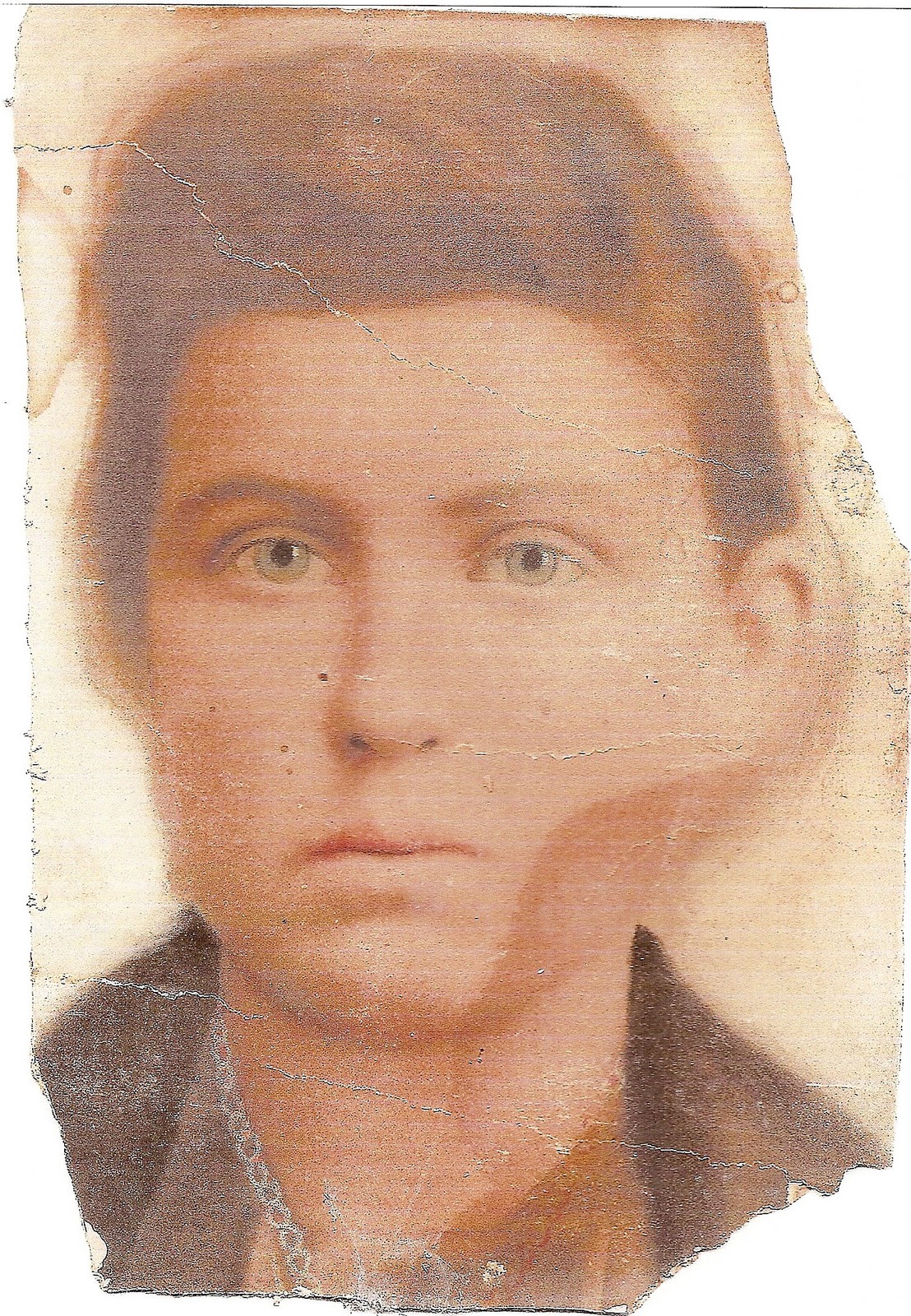
(This is the earliest picture we have of Grams. It was taken about the time of her first marriage to Harry Stewart. She was 16. The picture is distorted but you can tell that she was a very pretty girl.)


Part of  an of interview in a Chickasaw hearing concerning Sarah Jane Lambert Paul.

Question. Mrs. Paul ,  state how your husband, Sam Paul, during the time you lived with him , was he good to you or not?
Answer,  He was not. 

Question. In what respect was he not good?
Answer. Every way that was barbarous. 

Question. What do you know of his relations with other women during that time?
Answer. He was with them all the time -- he kept them all the time. 

Question. Well state how he kept them and where?
Answer. He kept them in my house. 

Same hearing, but we jump down through many questions and answers after Sarah names illegitimate children that were born to Sam Paul and the different women whom she names, to this point where Sarah is further questioned about Jim Ross and her relationship with him and how Sam Paul treated her.


                    Mattie Paul Ebisch                                             Willie Paul


Sammie Paul


                              Pictures of three of Sam Paul's illegitimate children


Question. Did he ever make any serious threat on you ?
Answer. Yes he tried to shoot me lots of times. 

Question. Describe one instance of what he did and said to you ?
Answer. He came home – he was just like a stranger—came in that time asked if I heard about some men getting killed and I said I did and he just run a pistol up my head   and said he would show me how they were killed, and tried to kill me but I broke away. 

A few questions later she is again asked about testimony Hugh A. Campbell has given on October 24, 1902. Sarah is asked if she knows that Hugh Campbell was present in the Cherokee nation near where she was living with Jim Ross. She says no. 

Question He mentions a man by the name of Jim Ross. Were you ever married to Jim Ross?
Answer. No Sir. 

Question. There is a note in the record that you married Jim Ross and had a child by him; Did you?
Answer. No sir I never had a child by any one but Sam Paul. 

Question. Why Mrs. Paul was it that you continued to remain as the wife of  Sam Paul after he treated you so badly and brought this lewd woman to his house?
Answer. Simply because I had to. He tried to run me off and I returned to my father and asked him to take us. He told me it was better for one to be killed than the whole family.

Question. Was your father afraid of Sam Paul?
Answer. Yes, sir.   

Question. What was the disposition of Sam Paul?  How many men had he killed in his life?
Answer.  I suppose fifteen or sixteen. 


                              Jim and His Daughter Dakotah in Indian Dress


          My Name is Jim Phillips. I am the great great grandson of Samuel Ikard Paul and Sarah Jane Lambert Paul. I will tell this story through the eyes and words of my great grandmother Hattie Jane Paul AKA Hattie Corley. 

          My father Sam Paul was a very powerful and feared man in Indian Territory and what became Oklahoma. He was a lawman and a Senator among the Chickasaw people. He killed a lot of outlaws in early Indian Territory.  My mother was Sarah Jane Lambert Paul. My mother and father fought a lot over everything. Many times according to my mother Sam would come in drunk and threaten to shoot or kill her and she would take off to the hills to hide herself and my brothers till Sam sobered up. She said that he would bring his girlfriends, prostitutes, and lovers home and kick her out of the bedroom and make her sleep in the kitchen on a pallet on the floor or a cot in the corner of the room. Mother said at times she would get so mad at him that she would insult him. Sarah said she just couldn’t keep her mouth shut and would say some stupid thing and he would threaten to kill or shoot her again. One time Sam came home and asked my mother if she had heard about the men he killed and she said, "Yes, did you shoot them in the back?" She said he rolled his big pistol up to her head and asked if she wanted him to show her how he killed them. 

          This all sets the background for my birth. I have two brothers Willie and Buck Paul. My mother and father fought a lot but they had four children. I was the last child born to Sarah and Sam Paul.  

          My father had been arrested for killing two outlaws and both of them were white men. Judge Parker hated my father and thought that he killed too many outlaws instead of bringing them to court, especially white outlaws. My father Sam Paul had been arrested just after my mother got pregnant with me. She felt that this time Parker would hang my father and she would be free of him at last. One time while Sam was on a rampage Mother went back home to her father and mother Hiram and Emily Lambert and begged them to take her in. But Grandpa Hiram bolted the door and told Sarah that she had made her decisions and that it would be better that only one would be killed rather than the whole family killed.. 

          My father Sam Paul was arrested in July 1882 and he was taken to Fort Smith Arkansas before Judge Parker. He was in jail there with Jim Ross. When Jim Ross got out on bail my mother Sarah looked Jim Ross up and made a deal with him to testify against Sam in court to say he shot down that white boy in cold blooded murder. Mother had promised to pay Jim Ross a lot of money to hide her in the Cherokee nation while she had her baby so that no would know about she had Sam’s last child and no one would take me from her. She also had him promise to take Buck and Willie and hide them too. Mother knew that if Sam died or was hung that it was possible for his family to take his children from her because they were powerful politicians among the Chickasaws. My mother was not romantically interested in Jim Ross at all but he was her road out of a very bad situation. 

          After I was born my mother gave me to her sister Juliana Lambert Corley to hide and to raise as her child.. I would get to be with my mother and aunt all the time, no matter what happened to Buck and Willie my brothers. 

          My father Sam Paul did get out of prison by a presidential pardon. My mother moved in with her family and Sam divorced her and got custody of my two brothers Buck and Willie Paul. 

          Over the years I got to be around my father a lot but I don’t think he ever knew who I really was. I always knew that he was my father as long as I can remember.  He thought I was his niece and not his daughter. He treated me real good and I wasn’t afraid of him as my mother was. I went to the Paul mansion many times and my father and grandpa Smith Paul would give me a gold or silver coin out of this great big strongbox full of a lot of gold and silver coins.  

          I watched my father give speeches many times and people would shoot at him and he would keep on speaking just like it didn’t happen. He was a very handsome man with steel gray eyes just like mine.  

          I saw him in a carnival on the forth of July gathering and he used to stand like a statue real still. He did not blink an eye and you couldn’t even see him breath. He was so handsome standing there dressed in his nice suits. The girls would come by and look at him real close to see if he was real or a statue. He would just stand there, as I watched him from a distance. One girl and her boyfriend came by several times and she looked at him real close. She finally reached out and touched him and he said "Boo!" She screamed real load and fainted and fell on the ground. Everybody laughed and  they  had to revive her. That was my father.


                                              Sam Paul, about 1890


To be continued


Monday, August 8, 2011

Sam Paul, Part Three


Well, I guess I'd better get back to my story. If you want to refresh your memory, you can refer back to my posts of July 10 and 17, Sam Paul, Parts One and Two.  

Back in 1877, when Sam Paul was tried in Judge Parker's court for selling liquor and for killing the prisoner John Ferral, he was the head of the Paul family. His mother Ela Teecha had died, and his father Smith Paul had married a younger woman and was building a house in town. Sam ran the ranch. He had married my great grandmother, Sarah Lambert, in 1874, and they had two children together: Smith Whealton Paul, then three years old, and William Hyram Paul, my grandfather, a year old baby. Sam's oldest son Joe, now eight, also lived with them.  

Sam may have been ruthless, but he was also fearless, a quality which was valued in a time when the threat of marauding plains Indians had been replaced by that of horse thieves and bank robbers. Sam was an officer in the Chickasaw Light Horse Police, and constable of Pickens County. He had become a prominent member of the community.  

The kind of man the Chickasaws wanted to defend their citizens against outlaws is illustrated by the charge given to their officers: "with or without warrant, arrest all outlaws, thieves, and murderers in your section, and if they resist, you will shoot them on the spot. And you will aide and assist all U.S. Marshals in the enforcement of the laws and make yourself a terror to evildoers. If afraid, turn in your resignation and I'll appoint better men in your place." In other words, the Chickasaw Light Horse Policeman was expected to serve as judge, jury, and if he deemed necessary, executioner in order to provide law and order.   

The Indian police were effective too. When my grandmother came to Indian Territory with her mother and father in 1888 she said, "We had some trouble crossing Arkansas, but after we crossed into Indian Territory we never were bothered by anyone. My father would buy feed from the Indians, and they were the most accommodating people I ever met." The Five Civilized Tribes welcomed white settlers, and they kept the peace.

Technically the Indian police could not arrest a white man, and their courts had no jurisdiction over them. The white settlers were no problem. Many of them had been living peacefully with the Indians for generations, but gradually, white outlaws sought refuge in Indian Territory, and soon they became the scourge of the territory, robbing and stealing, and killing anyone who got in their way. The 200 or so federal marshals assigned to Indian Territory were incapable of dealing with the situation. The challenge of arresting suspects, getting witnesses to travel 200 miles of more to Fort Smith for the trials, the sheer volume of cases, was overwhelming, so for the most part the Indian Police were on their own.  

During the four years Sam Paul served as an Indian Policeman, we don't know about the dozens of cases he must have dealt with, the dangers he faced, the decisions he had to make. The only two stories about his service that have been handed down to us are the two cases that led to him being tried for murder.  

The first of these episodes occurred in 1881. A cowboy named Frank Welch came into town to report a stolen horse, and was referred to Sam Paul. Welch reported that his boss, a rancher in the southern part of the territory named John Covey, had sent him to track down two men who had stolen one of their horses. The trail had led Welch to two men who joined up with a wagon train near Pauls Valley. The remarkable story of this tracker's skill is recorded in the record of Sam Paul's trial. (see The Trackers, Part 2, posted Jan 21, 2011.) Welch was able to identify the two individuals involved: one was a man named Smith, and the other was Sam Ross, son of the leader of the wagon train, "Old Man" John Ross.  

Sam Paul quickly organized a posse, and with Welch's help identified the man Smith as he came into Miller and Green's, a general merchandise store. Sam decided to wait until morning to make the arrests because the wagon train was getting ready to make camp down by Rush Creek. When the posse reassembled the next morning, he split them up in order to cover all the exits from the valley.  

As Sam and his nephew Fred Waite rode down toward the camp, they met two men on horseback, one of which they recognized as Smith. He was riding the stolen horse. When Sam called out for the men to halt, they pulled out their rifles and started firing. Sam and Fred returned the fire, killing Smith. The other man got away.  

Sam Paul sent word to the rest of the posse to apprehend the other horse thief, Sam Ross, as well as the man riding with Smith. Then as he was riding down toward the wagon train he met Welch and his half brother, Tecumseh McClure. They had just finished having breakfast. It seems that Welch, on hearing the shots fired during Sam and Fred's gun battle, rode into the camp and confronted Old Man Ross. He warned Ross that if he didn't pay for or return the stolen horse, his son was going to hang. Ross paid for the horse. Welch told Sam that he was dropping the charges, and that was the end of that, at least for the time being.    

To be continued.


Sunday, July 24, 2011

The Hangin' Judge


Isaac C. Parker


 After the Civil War the area which is now the panhandle of Oklahoma became known as "No Man's Land." By an accident of treaties No Man's Land was not in the jurisdiction of any state or territory, so it became a refuge for outlaws, gamblers, cattle rustlers, and other frontier riffraff. There was a sign on the border of No Man's Land which said: "Fort Smith, Five Hundred Miles." 

In 1882 an outlaw gang galloped into the relative safety of No Man's Land barely escaping a group of federal marshals that were hot on their trail. As they passed the Fort Smith sign, they shot it full of holes to show their contempt for law and order. Later though, one of the outlaws returned to the sign and carved at the bottom the words, "To Hell," indicating his fear of the punishment that Fort Smith represented.

This fear instilled by Fort Smith originated with Isaac C. Parker, appointed as federal judge over the Federal District Court of Western Arkansas in 1875. (See blog of July 17, 2011, Sam Paul, Part Two.) Before Judge Parker's tenure, the court had been ineffective in enforcing the law over its vast jurisdiction, and Indian Territory had become a refuge for criminals. Parker appointed federal marshals to bring in offenders. In the past it had been hard to convince witnesses to travel the long distance to Fort Smith to testify, but Judge Parker's subpoenas were backed by the same marshals who instilled fear in the outlaws, so witnesses began to cooperate.  

Judge Parker's marshals were a formidable group. These men, among them Heck Thomas,  James Mershon, Heck Bruner, and Jacob Yoes became as famous as the outlaws they brought in. Their determination and courage inspired much of the folk lore that has been handed down to us about the old west.   

Even though underpaid and often outnumbered by the outlaws they pursued, the marshals were as determined as Judge Parker to bring law and order to the frontier. One of the most difficult outlaws to bring in was Ned Christie. Wanted for horse stealing, robbery, whiskey peddling, and murder, Marshals Heck Bruner and Barney Connelley trailed him for months without success. Finally when Deputy Marshal L.P. Isabel cornered him, Christie although injured, shot Isabel, who was then disabled for life. Finally a group of 16 marshals assaulted Christie and his gang, holed up in a fort in a narrow canyon. Christie, who was a crack shot, held off the marshals for weeks against even a cannon which was brought up from Coffeeville, Kansas. Finally, at the risk of his life, Deputy Marshal Copeland placed a dynamite charge under the fort, blowing it apart and dislodging Christie, who was then shot as he attempted to escape.  

On another case Martin Joseph, a horse thief from Texas, murdered Bud Stephens, and then raped and murdered his sixteen year old bride. Then he threw their bodies into a deep crevasse which led down into a cave. Months later, Marshal James Mershon apprehended Joseph and obtained a confession, but the district attorney wanted proof of the murder, so Marshal Yoes sent out his men to retrieve the bones. Deputy Marshal John Spencer volunteered to be lowered into the cave, but when he reached the bones he found himself surrounded by a den of rattlesnakes. "For God's sake, pull me up quick!" he screamed. After regaining his composure, Spencer asked to be lowered back down again, this time carrying a lantern, a revolver and a sack.  

On reaching the bottom, Spencer was confronted by a huge rattlesnake. With nerves of steel, he stood his ground, and shot the snake even as it coiled itself around his arm and neck. He then filled the sack with the bones of the victims and called out to be pulled back up. When the other marshals saw the snake wrapped around Spencer's neck, they almost let him fall back into the pit, but fortunately they kept their heads and the evidence was returned to Fort Smith. Martin Joseph was convicted and hanged.  

Due to Judge Parker's efforts, the old jail, the basement of the courthouse, was soon filled to overflowing. Minimal attention was paid to the prisoners' comfort, and conditions inside were deplorable. One man passing by it, being buffeted by the fowl odors and the demoniacal cries issuing from within, was quoted as saying, "If this is not Hell, I don't know where Hell is." A juror once insisted on inspecting the jail. Inside, he picked up a piece of bread and meat, both infested with vermin. He took them into the courtroom and placed them on Judge Parker's desk, threatening to send them to Washington.

Soon after that, a larger jail was built, but soon it too was housing six men per cell, double its planned capacity. It was not uncommon for prisoners to die awaiting trial. 

The trip to Fort Smith was also an ordeal for those accused of crimes in Indian Territory.

Typically, a group of deputies were sent out with several arrest warrants. Prisoners were rounded up and shackled to a chain which was in turn bolted to a log. They were then forced to march to Fort Smith, a journey of almost 200 miles, dragging the log. A chuck wagon was provided to feed the prisoners, but only those unable to walk were allowed to ride in the wagon.  

Judge Parker was more interested in meting out justice than in impartiality. During trials he usually made up his own mind as to the guilt or innocence of the defendant, and then made his opinion clear in his instructions to the jury. In one instance the main case against the defendant was that he hid the evidence of the crime. Judge Parker said in his instructions to the jury:  

            The questions for you to pass upon is whether or not … there were acts upon the part of this defendant … that looked toward concealing this act of the killing of Wilson; what these acts were; if they were cruel, if they were unnatural, if they were barbarous … that men who are conscious of innocence do not usually characterize their conduct after a killing by that sort of acts … the concealment of this body, the concealment of this horse, the killing of the horse, and the concealing of everything that pertained to that man … that they might be discovered afterwards as evidences of the killing.

            And bear in mind that the other witness in this case cannot appear before you. He cannot speak to you, except as he speaks by his body as it was found, having been denied even the right of decent burial … these circumstances … stand as bloody, naked facts before you, speaking for Joseph Wilson and justice.    

During Judge Parker's 21 year term, from 1875 until his death in 1896, 344 persons were tried for murder, and 88 were hanged.  

Judge Parker's fame spread throughout the country. News of the outlaws tried in his court was carried in all the newspapers, and their hangings were attended by hundreds. Even his hangman, George Maledon, became a celebrity. In 1894 Maledon retired and toured the country displaying gallows relics, including nooses, and photos of the famous outlaws he had hanged. In 1898, a popular book about Judge Parker's court, Hell on the Border, declared Maledon "The Prince of Hangmen." 

While strict, Judge Parker was actually sympathetic to the Indian governments. He upheld the Indians= land rights against Texas cattlemen, and he upheld the rights of the Cherokees to eject >Boomers= settling illegally in their territory. Many Indian leaders supported Parker because he treated whites and Indians equally. 

Judge Parker said once about the Indians: 

Perhaps things would have been different had the government given them the protection it promised in 1828. >Not only will we give you farms and homes in fee simple,= it said, >but we will protect you in your rights. We will give you every protection against lawlessness; we will see that every refugee, every bandit, every murderer that comes into your country is put out.= Not one of these pledges has ever been kept, except for the work that has been done by the United States courts having jurisdiction over this country.  

The Creek Chief, Pleasant Porter, laid a wreath of wild flowers on Judge Parker's grave.  


Saturday, February 12, 2011

Nadua, Cynthia Ann Parker


                                         Nadua, Cynthia Ann Parker

          In December of 1860 the Texas Rangers made a surprise attack on 20 Comanche Indians who they believed had been raiding settlements in the area.  As the Comanche fled, the Rangers cut them down. One woman carrying a baby was spared. Her name was Nadua. Her husband was Peta Nocona, a great Comanche chief, and her son was Quanah Parker, the last chief of the Comanche.

          The relentless westward expansion of white settlers displaced, one by one, the Native American tribes from their homelands. Hundreds of tribes were crowded together onto land depleted of the game they depended on for survival. Relationships between tribal groups that had developed over centuries were disrupted, leading to wars among the tribes. An endless series of broken promises convinced the Indians that the word of the white man could not be trusted. Native Americans dealt with their dilemma in various ways: by trying to adopt the white man's ways, by trying to escape by moving further west, and by retaliation. The Comanche chose the latter.

          During the 1830's the Comanche lead an effort to create an Indian alliance, as had the Shawnee chief Tecumseh and the Sauk chief Black Hawk. One of the leaders of this movement was Nadua's husband Peta Nocona. Peta was the son of another Comanche chief, Iron Jacket, of whom it was said he could blow bullets away with his breath.

          In 1833, a white settler named John Parker brought his family down from Illinois to east Texas. He built a fort, made friends with some of the local Indian Tribes, and began farming. What he didn't realize was that he had settled in Comanche country. In 1836, a band of Comanche, led by Chief Nocona, attacked the Parker settlement. Five men were killed, and six women and children were taken hostage.

          Among the hostages were Cynthia Ann Parker, age 9, and her brother John, age 5. Eventually all the hostages were ransomed except for Cynthia Ann, who was given the name Nadua, 'someone found,' in the Comanche language. Chief Nocona married Nadua, and they had three children together: two boys Quanah (Fragrance) and Pecos (Pecan), and a girl Topsanna (Prairie Flower). Nocona's affection for Nadua was so great that he never took another wife unlike most chiefs of his rank.

          At the time of the 1860 attack on Chief Nocona's band, the chief and his son Quanah were away hunting. Sull Ross, commander of the Texas Ranger unit which massacred the little group of Comanches, claimed to have killed Chief Nocona. Ross made a lot of his victory over the little band of Comanches, claiming that it put an end to the "great Comanche confederacy." It earned him the notoriety that later got him elected Governor or Texas.

          The other claim made by Ross was that he had rescued the long lost captive of the Comanche, Cynthia Ann Parker. Soon after Nadua's capture by Ross, one of his men noticed that her eyes were blue. After much questioning Ross managed to connect Nadua, who had forgotten how to speak English, with the Fort Parker massacre 25 years before. Nadua was returned to her white family, and when her uncle Isaac Parker mentioned that his niece Cythia had been captured by the Comanches, Nadua said: "me Cincee Ann." Although her family tried to make her feel at home, Nadua begged them to let her rejoin her Indian family, and she tried several times to escape. Four years after her capture, Nadua's daughter Prairie Flower died of pneumonia. After that Nadua stopped eating and soon she sickened and died.

          Nadua's husband Nocona also died soon after his wife and daughter were captured. According to his son Quanah he died of injuries he had sustained years before in a battle with the Apache.


                                                  Quanah Parker

          Quanah Parker lived until 1911. He had five wives and 25 children. After his father's death he became a great warrior and a great chief in his own right. He led the largest band of Comanche to remain free until in 1875, he was finally defeated at the Battle of Palo Duro Canyon. Soon after he and his his warriors surrendered and were forced to go to the Comanche reservation in southeastern Oklahoma where he was chosen chief over all the Comanche.

          Once in Indian Territory, Quanah Parker adapted well to the white culture. He took his mother's surname of Parker, and became a successful rancher. He included among his friends Theodore Roosevelt. He rode in Roosevelt's inaugural parade and Roosevelt visited Parker at his home in Oklahoma where they went hunting together.

          Quanah Parker was loyal to his Indian heritage. He helped found the Native American Church, an attempt to join together Christian and Indian traditions. Quanah was also loyal to his family. He became acquainted with his white family and before his death retrieved the remains of his mother and sister, and buried them near his home in Oklahoma.  


                                                      Quanah Parker

Thursday, January 20, 2011

The Trackers, Part 2


                                 Isaac C Parker, "The Hanging Judge"

          When I started my last post what I really had in mind was this story, but I had read about what phenomenal trackers the Chickasaws were, so I began with that.

           Several years ago, I ordered a transcript of the murder trial of my great grandfather, Sam Paul, from the National Archives. When I received the transcript I took it with me on a visit with my mother so we could read it together. What fascinated us most about the transcript was the testimony of a cowboy who described how he tracked down a horse thief. 

          Before I let you read this remarkable account I'm going to have to give you some background about the situation in Indian Territory in the late 1800's. The Indian Nations were sovereign states. They had their own laws, their own governments and their own police force. At the same time however, their territory was part of the United States and they had no jurisdiction over U.S. citizens. As a result, Indian Territory became a haven for outlaws.

          It was during this time that Indian Territory came to be known as the "Wild Wild West." It was the time of Jesse James, and Belle Starr, of the Dalton Gang and Cherokee Bill. The federal court responsible for Indian Territory was in Ft. Smith Arkansas, presided over by  Judge Isaac C. Parker, nicknamed "the hanging judge" because during his tenure he sentenced 88 men to hang. Several more men died in Judge Parker's crowded, rat infested jail before they could be hanged, and one was shot while attempting to escape. Judge Parker's marshals, such as James Mershon and Heck Thomas, became famous in their own right. Many of the well known western dramas such as True Grit and Hang 'Em High have been inspired by Judge Parker, his deputies, and the outlaws they went up against. 

          What is not so well known is the story of the Indian police. The Light Horse Police, as they were called, were a tough bunch. Their instructions were to: Awith or without warrant, arrest all outlaws, thieves, and murderers in your section. And if they resist, you will shoot them on the spot. And, you will aide and assist US Marshals in the enforcement of the laws and make yourself a terror to evil doers. If afraid, turn in your resignation and I=ll appoint better men in your place.@ My great grandfather, Sam Paul, was a sergeant in the Chickasaw Light Horse Police force.

          The Light Horse Police had to deal with dozens of white criminals living on their land, with only a handful of federal marshals to whom they could turn for support. These criminals were dangerous, and they had friends. It was hard to transport them to Ft Smith for trial, and it was hard to find witnesses. Few were willing to travel the 200 miles from the Chickasaw Nation to Ft. Smith to testify against a man whose friends were likely to take revenge on them or on their family afterwards. As a result an Indian policeman sometimes made himself judge, jury, and executioner.That's how Sam Paul came to be charged with murder. He shot a horse thief.

          There's a lot more to that story, but what I want to do now is get to the testimony of the cowboy, Frank Welch, who tracked down the horse thief that Sam Paul killed. I've changed some of the punctuation to make the narrative more readable, and added a few comments in parentheses.

United States vs. Sam Paul, etc. For the murder of Smith (first name unknown).
Court of the Western District of Arkansas, Judge Isaac C Parker presiding.

Testimony of Frank Welch:
          It was on Saturday night the horse was stolen. I think it was in April. I missed the horse at 9 o'clock. On that night I had tied this horse so that I could have him to go to the prairie in the morning. I had him tied in the lot behind a little corn crib.
          There were 18 or 20 head of horses in the lot. There was only one bar up between the pasture & the lot. Part of the rope was there, and part was gone. It looked as if the rope had been partly cut & partly broke. It looked as if there was two more men's tracks & three horse tracks on the outside of the fence.
          The men's tracks looked as if they had stopped. The horse tracks stopped there at the lot fence; the horse had been taken through the bars into the pasture and then the pasture fence let down where the horse was taken out. 
          The three other horse tracks came down along the fence and met this horse and all went off together. I noticed the tracks. They looked like the same tracks that had stopped at the lot fence. The stolen horse was shod in front. The track going out was that of a horse shod in front. They came close to the house. The men's tracks came into the lot; cannot tell which way they went. I called the horse I lost a dapple grey. The tracks of one of these three horses outside of the fence was a large rough shod steel toed shoe. The tracks of these horses from the gap went west right close to the house where old man Ross lived. My horses track went along with the others. ("old man" Ross' son was one of the horse thieves)  
          John Covey (Welch's boss) and Watt Holford went with me and tracked them near to Rosses house. The four tracks kept together. Ross started the next morning from there. He had gone when we tracked these horses close to his house. I trailed them for several days.
          Covey had me to go on. He could not leave. I was in his employ. Two tracks went up to the house. One of them the steel toed horse & another, and the track I took for my horse and another track went north across the Washita (River). I saw some tracks up near Cherokee Town. The track was a bare footed track, I think with that of my horse…..I followed them and overtook them right there near the valley. I was alone when I saw them. I did not molest them at all. I was afraid to….. When I saw two men, I went off the road. I examined the tracks after they passed me. I think Smith's (the horse thief who was killed) horse was barefooted.
          It was my business to watch and track these men. Dr Lewis told me about meeting these men. He said he lived near Springville on Canadian (River). He said they were going towards where he lived. It is but a few miles from Cherokee Town to the Valley Store. I had been watching the train (wagon train) expecting them to meet it. I never saw the men with the train. They went to the train about ten miles below Cherokee Town. (The horse thieves were part of a wagon train led by "old man" Ross which was travelling through the territory.)
          The next morning I went around the train and saw these two parties leave the train and come up the road following me. They came for about a mile and left the road. I got into the road above the train. I went on up into the valley. Got information from Strain at Cherokee Town that two men answering the description of the men I had received information of before had gone down the direction I had seen the two men meet the train. I started to Sam Paul's house to get him to help me as he was an officer and I met him going to the valley store. I told him what I wanted and he promised to help me.

          The testimony is a little hard to follow because it is redundant and it doesn't include the lawyer's questions, but you can figure it out if you read it slowly.

          The cowboy, Frank Welch, really makes his tracking sound easy, but I think his story is remarkable. Even though the horse thieves have a head start, he manages to track them for several days before he actually sees them. He determines the number of men, the number of horses, and he can identify each of the horses by their tracks. He doesn't lose them even though they split up, cross the river, and pass by towns. Finally when he gets close enough to identify the thieves by sight and sees them join a wagon train he finds the local Indian policeman, my great grandfather, and asks him for help. Pretty amazing, don't you think?