Showing posts with label Sarah Lambert Paul. Show all posts

Saturday, October 1, 2011

Hattie Jane, Part Two

Hattie Jane's Story, as told to her great grandson, Dr James Phillips discovertheword.com


                                            James and His Wife Marilyn 
            My name is Jim Phillips, great great grandson of Sam Paul and Sarah Jane Lambert. 

            I had always lived near my great grandmother Hattie Jane. I called her Grams. My grandmother Dottie Opal Stewart Wilburn I called Momma. Grams was like my grandmother, and my grandmother Dottie was like my mother. My father was killed when I was two years old, and I had always slept in the bed with my Grandmother Dottie and grandfather Charlie Wilburn. My grandfather was Cherokee, tall about 6’2”, but a bent man because of sickness. He weighed about 140 Lbs. His lungs were greatly damaged in WWI, and even though he was only in his forties by his fifties he was an old man.


                                             Dottie and Charlie Wilburn


             My grandmother Dottie always watched after her mother Hattie. When she was sick she took care of her, and even when my grandmother was a young child she took care of all of her brothers and sisters and her mother.

            Dottie only went to school one year and that was the third grade. She only knew how to write in cursive. She taught me how to write in cursive before I ever went to school. Dottie was a great musician and vocalist. She could play a lot of musical instruments and the piano. If she heard a song one time she could sing and play it on and instrument.

            My grandparents taught me honesty. We lived a hard life but their word was iron. Their word meant everything to them. They would not lie for any reason, not for life or death. They would have died before they cheated a man out of a payment that they owed or break their given word.  

            In Oklahoma my grandfather was a bootlegger. That may sound funny these days being a bootlegger and honest. These people were Indians and they knew that just not everything this white government did was on the up and up. Every family heirloom I have handed down to me was bought with whiskey. A Remington 22 rifle, a 7 jewel Elgin pocket watch, and a steel skillet are the priceless family heirlooms. The watch is now lost. My grandfather was too sick to work but my grandmother worked in the fields as a field hand, for the railroad as an oiler, and did painting and household repair. She also cleaned houses and did laundry and ironing.

            My grandma and grandfather were very frugal. When they came to California they lived in tents in an Okie village they called Little Oklahoma, A lot of the country and western singers that would become stars lived in that village also.   

          It wasn’t long till my grandfather and mother had bought an acre of ground and built a little shack on it we called home. Our little shack did not even have a door, just a tarp flap over where a door should have been. We couldn’t find a piece of wood large enough for a door. The shack was about 10 ft by 12 ft put together out of wood that someone had thrown into the canal behind our shack. We had a wood stove to cook on to the right side of the shack a little closet built onto the right rear of the room and a bed to the left rear. A little table with a couple of boxes worked for chairs. We did not have electricity or running water. Our running water was in the canal ditch that ran by our house.


        This is me at about age ten with my pet chicken, Hoppy, in front of our shack


          Because we did not have an ice box we had no way to keep our beans cold or store them. When we came in from work in the summer time near Bakersfield, California where it gets above 110 degrees every day, the bean pot would just be boiling with fermentation. Grandma had to build a fire under the bean pot and make the beansboil for at least a half hour before we could eat them. Grandma Dottie would always throw in a pinch of baking soda. Grandma said that would keep us from getting a belly ache. (food Poisoning). We could only afford to eat beans, and we could not take the time to cook a fresh pot of beans everyday. It took too long and we had to work too many hours.  

          Of course we had two hole out house, which served for a garbage pit and restroom (Nowadays people dig up old out houses to find all kinds of treasures that fell down the hole). It was a major job to dig a new hole and to move the outhouse about every six months. 

After we had our shack and outhouse built, Grams (Hattie) came with her second husband Roscoe, and moved on the front of the property in a little blue and silver trailer.


                                                  Grams and Roscoe Russell


I spent a lot of time with Grams and Roscoe, Roscoe was my step great grandfather, He was good to me and I loved him, but I just never did call him grandpa.  The Russells, Corleys, Lamberts, and Pauls were all related, and Grams told me they were all part Indian. The Russells were Chickahomony from Virginia, and the Corleys were from Virginia also (there are some Corleys on the Chickasaw rolls). I don’t know exactly what kind of Indian the Lamberts were, but Grams said they were Indian also. They could have been Chickasaw, but I don’t know for sure. Some things are foggy after all these years.

My mother moved into a house next door with my Dad, but I lived with my grandparents even when my father was still alive. My great uncles and aunts all threw up little dwellings here and there. We had a regular old time Indian village erected in no time at all. 

My mother worked with my father James Phillips in used car lots and fruit stands and a gas station that they ran. I lived with Grandma and Grams.


Faye and James Phillips, my parents, in front of their service station and fruit stand, early '40's


Grams dipped Garrett snuff and always told me when I grew up that if I should use a little snuff I would never get worms or hemorrhoids. She was really serious about that. I took all the old Indian remedies whether I was sick or not, just like in the old days they used to say.

In this setting I got to hear all kinds of stories from Grams. My grandmother and Grams always did their laundry on a rub board and heated their water outside. Grams and Grandma would talk Chickasaw when no one else was around. They would just jabber away and I couldn’t understand a word that they were saying. I asked my grandmother what language that she was speaking and she would say Indian. She would not teach me how to speak Indian because my grandpa Charlie and Roscoe did not approve of it.

When one of us had something to eat everybody ate. Gram’s was a great cook cooking all types of Indian foods from the old days as they said. We ate rabbits, fish an occasional deer or bear, and crawdads that my uncles caught or killed. Grams always cooked outside when she lived in her trailer. Later she moved in next door and she had a regular stove and she cooked some things in the oven. In those days they threw away sheep heads and cow heads goat heads and hog heads, it seems that she always had one of them in the oven. She cooked chicken heads and chicken feet and chitlins from chickens and all the animal guts she could get.

When I stayed with grams she would tell me stories of her family when Roscoe was not around. Roscoe called Grams a black footed gut eater. Her sons would talk down to her in the same way and call her The Indian Sqaw or Jim Crow because she had some black brothers and sisters from Sam Paul’s Illegitimate Negro girlfriends. Grams had a picture of one of them which I now have.


Sam Paul's Negro children, Willie and baby (name unknown)


Grams, in spite of all of this degradation because of being Sam Paul’s daughter and an Indian, loved and cared for her children. I never saw her have a single conversation with anyone in the family but my grandmother Dottie and myself.

I will begin to tell you some of these stories in her words and through her eyes.

Hattie Jane's memories:


                                                 Jason and Ellen McClure


A few times in the early days of my life a dog would come up in the yard foaming at the mouth and Grams would take me in her little trailer and tell me about mad dogs with hydrophobia.  

She would say:   

Jimmy, my grandma’s first husband died of hydrophobia. You’ve got to stay away from them mad dogs and shoot 'um if you can and burn 'um plum up to kill the disease. My grandma's first husband was bit by a mad dog and he sent for his friend (This must have been Smith Paul, her grandfather), to look for a madstone to save his life. A mad stone could not be found anywhere. Our people had to leave our country back east so fast that many important medicines were left behind or lost on the trail on the way to Indian Territory.  

A madstone was the only known  cure for rabies in the early history of man. American Indians used them and passed this knowledge down to many old time white doctors that used folk medicines. Even in Europe and the Middle East madstones were used to cure rabid bites from animals and snake bites. To learn more about madstones go to Google and look up the “Lee Penny a madstone” you can learn much about the use of madstones for medical cures and their legitimate place in documented cures for hundreds of years in ancient medicine.  

Back to Hattie's story:  

My Grandpa Smith (Paul) was then told by Rev. Mc Clure to take him way out in the woods away from his family and friends. Jimmy, they took a length of strong chain and some locks. Rev. Mc Clure had them gather up a lot of dry wood and brush and stack it in a big pile. Rev. McClure said that grandpa could not bury him because the dogs and wolves might dig him up and carry on the hydrophobia, and more people would have to die. After they got everything ready, Rev. McClure put the chain around his neck and locked the lock tight so he couldn’t get loose and hurt anyone. Mc Clure was a good man from everything I have heard about him, and his son Tecumseh is a real good man too. He is my Uncle. I was always proud of Tecumseh the other Indians always liked him more that they did my father Sam Paul. Smith and Rev. Mc Clure laid out a pallet for him to lay on under this big tree and chained the other end of the chain to the tree trunk. The Reverend got real bad and Grandpa Smith could not bring himself to shoot him and to put him out of his miseries. The Reverend finally died, and grandpa Smith  put Mc Clure and all his personal effects upon the brush and wood pile and burned them completely up. Later grandpa Smith kept his promise to him to watch after his wife and children. Grandmother had three children by the Reverend Mc Clure: Catherine, Tecumseh and a baby that died.

Grams told me this story several times.
 

To be continued:
`
For more about Hattie Jane's grandmother, Ellen or Ela-Teecha, see the post of February 28, 2011, Indian Territory, 1845.

For more about Jason McClure, Ellen's first husband, see post of December 29, 2010, Jason McClure.

Saturday, September 24, 2011

Hattie Jane, Part One


Hattie Jane's Story, as told to her great grandson, Dr James Phillips
discovertheword.com


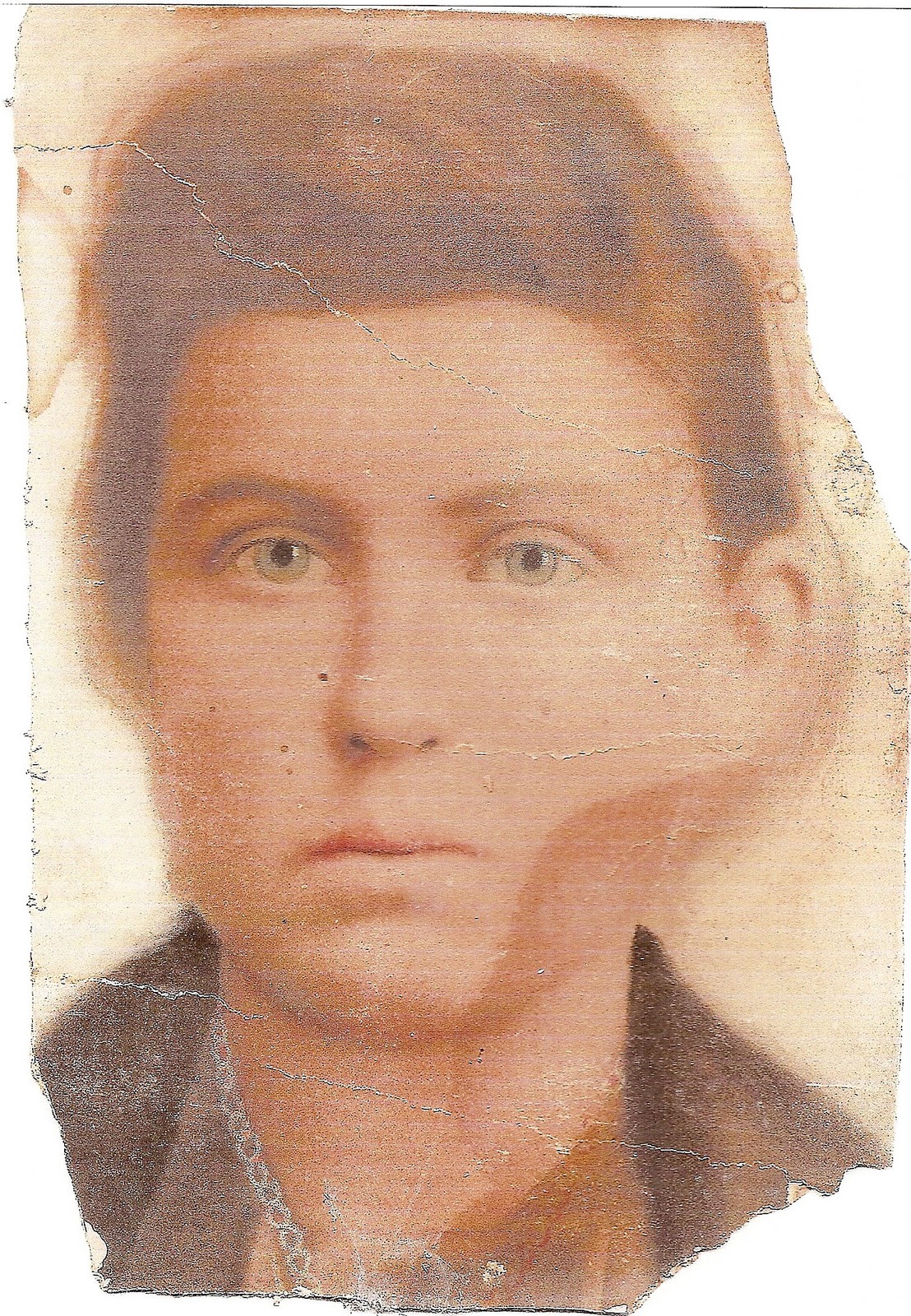
                                          Hattie Jane Paul Corley
(This is the earliest picture we have of Grams. It was taken about the time of her first marriage to Harry Stewart. She was 16. The picture is distorted but you can tell that she was a very pretty girl.)


Part of  an of interview in a Chickasaw hearing concerning Sarah Jane Lambert Paul.

Question. Mrs. Paul ,  state how your husband, Sam Paul, during the time you lived with him , was he good to you or not?
Answer,  He was not. 

Question. In what respect was he not good?
Answer. Every way that was barbarous. 

Question. What do you know of his relations with other women during that time?
Answer. He was with them all the time -- he kept them all the time. 

Question. Well state how he kept them and where?
Answer. He kept them in my house. 

Same hearing, but we jump down through many questions and answers after Sarah names illegitimate children that were born to Sam Paul and the different women whom she names, to this point where Sarah is further questioned about Jim Ross and her relationship with him and how Sam Paul treated her.


                    Mattie Paul Ebisch                                             Willie Paul


Sammie Paul


                              Pictures of three of Sam Paul's illegitimate children


Question. Did he ever make any serious threat on you ?
Answer. Yes he tried to shoot me lots of times. 

Question. Describe one instance of what he did and said to you ?
Answer. He came home – he was just like a stranger—came in that time asked if I heard about some men getting killed and I said I did and he just run a pistol up my head   and said he would show me how they were killed, and tried to kill me but I broke away. 

A few questions later she is again asked about testimony Hugh A. Campbell has given on October 24, 1902. Sarah is asked if she knows that Hugh Campbell was present in the Cherokee nation near where she was living with Jim Ross. She says no. 

Question He mentions a man by the name of Jim Ross. Were you ever married to Jim Ross?
Answer. No Sir. 

Question. There is a note in the record that you married Jim Ross and had a child by him; Did you?
Answer. No sir I never had a child by any one but Sam Paul. 

Question. Why Mrs. Paul was it that you continued to remain as the wife of  Sam Paul after he treated you so badly and brought this lewd woman to his house?
Answer. Simply because I had to. He tried to run me off and I returned to my father and asked him to take us. He told me it was better for one to be killed than the whole family.

Question. Was your father afraid of Sam Paul?
Answer. Yes, sir.   

Question. What was the disposition of Sam Paul?  How many men had he killed in his life?
Answer.  I suppose fifteen or sixteen. 


                              Jim and His Daughter Dakotah in Indian Dress


          My Name is Jim Phillips. I am the great great grandson of Samuel Ikard Paul and Sarah Jane Lambert Paul. I will tell this story through the eyes and words of my great grandmother Hattie Jane Paul AKA Hattie Corley. 

          My father Sam Paul was a very powerful and feared man in Indian Territory and what became Oklahoma. He was a lawman and a Senator among the Chickasaw people. He killed a lot of outlaws in early Indian Territory.  My mother was Sarah Jane Lambert Paul. My mother and father fought a lot over everything. Many times according to my mother Sam would come in drunk and threaten to shoot or kill her and she would take off to the hills to hide herself and my brothers till Sam sobered up. She said that he would bring his girlfriends, prostitutes, and lovers home and kick her out of the bedroom and make her sleep in the kitchen on a pallet on the floor or a cot in the corner of the room. Mother said at times she would get so mad at him that she would insult him. Sarah said she just couldn’t keep her mouth shut and would say some stupid thing and he would threaten to kill or shoot her again. One time Sam came home and asked my mother if she had heard about the men he killed and she said, "Yes, did you shoot them in the back?" She said he rolled his big pistol up to her head and asked if she wanted him to show her how he killed them. 

          This all sets the background for my birth. I have two brothers Willie and Buck Paul. My mother and father fought a lot but they had four children. I was the last child born to Sarah and Sam Paul.  

          My father had been arrested for killing two outlaws and both of them were white men. Judge Parker hated my father and thought that he killed too many outlaws instead of bringing them to court, especially white outlaws. My father Sam Paul had been arrested just after my mother got pregnant with me. She felt that this time Parker would hang my father and she would be free of him at last. One time while Sam was on a rampage Mother went back home to her father and mother Hiram and Emily Lambert and begged them to take her in. But Grandpa Hiram bolted the door and told Sarah that she had made her decisions and that it would be better that only one would be killed rather than the whole family killed.. 

          My father Sam Paul was arrested in July 1882 and he was taken to Fort Smith Arkansas before Judge Parker. He was in jail there with Jim Ross. When Jim Ross got out on bail my mother Sarah looked Jim Ross up and made a deal with him to testify against Sam in court to say he shot down that white boy in cold blooded murder. Mother had promised to pay Jim Ross a lot of money to hide her in the Cherokee nation while she had her baby so that no would know about she had Sam’s last child and no one would take me from her. She also had him promise to take Buck and Willie and hide them too. Mother knew that if Sam died or was hung that it was possible for his family to take his children from her because they were powerful politicians among the Chickasaws. My mother was not romantically interested in Jim Ross at all but he was her road out of a very bad situation. 

          After I was born my mother gave me to her sister Juliana Lambert Corley to hide and to raise as her child.. I would get to be with my mother and aunt all the time, no matter what happened to Buck and Willie my brothers. 

          My father Sam Paul did get out of prison by a presidential pardon. My mother moved in with her family and Sam divorced her and got custody of my two brothers Buck and Willie Paul. 

          Over the years I got to be around my father a lot but I don’t think he ever knew who I really was. I always knew that he was my father as long as I can remember.  He thought I was his niece and not his daughter. He treated me real good and I wasn’t afraid of him as my mother was. I went to the Paul mansion many times and my father and grandpa Smith Paul would give me a gold or silver coin out of this great big strongbox full of a lot of gold and silver coins.  

          I watched my father give speeches many times and people would shoot at him and he would keep on speaking just like it didn’t happen. He was a very handsome man with steel gray eyes just like mine.  

          I saw him in a carnival on the forth of July gathering and he used to stand like a statue real still. He did not blink an eye and you couldn’t even see him breath. He was so handsome standing there dressed in his nice suits. The girls would come by and look at him real close to see if he was real or a statue. He would just stand there, as I watched him from a distance. One girl and her boyfriend came by several times and she looked at him real close. She finally reached out and touched him and he said "Boo!" She screamed real load and fainted and fell on the ground. Everybody laughed and  they  had to revive her. That was my father.


                                              Sam Paul, about 1890


To be continued


Sunday, September 11, 2011

Sam Paul, Part Five


                                  Sarah Jane Lambert Paul


When Sam Paul was released from federal prison, he returned to Indian Territory, and within a few months he had divorced my great grandmother, Sarah, and married another woman, Jennie Talbot. Custody of the children, my grandfather Bill and his brother Buck, was awarded to Sam by a Chickasaw jury.  

The whereabouts of Sarah during Sam's imprisonment are a mystery. She never gave any plausible explanation herself. Bill and Buck probably knew, but they never talked about it. The only evidence comes from a hearing held in 1904 after Sam's death regarding Sarah's status as an intermarried Chickasaw Citizen.  

At the time of the Dawes Commission, there were many fraudulent claims to Chickasaw citizenship by white people wanting Indian land, so the Chickasaws and Choctaws requested and received permission to set up their own commission to question claims. Sarah's claim was one of those questioned so there is a record of the proceedings.  

Apparently Sam divorced Sarah because he thought she had been unfaithful to him. Rumor was that she had run off with Sam's co-defendant in the murder of John Harkins, Jim Ross, the man who, after spending ten months on death row in Ft. Smith with Sam, convinced the jury to convict Sam instead of him. (See post of September 3, 2011, Sam Paul, Part Four) 

Here's part of the testimony of Hugh Campbell, a friend of Sam's who testified to the rumor:


Q: Do you know anything about the separation of Sam Paul and Sarah J. Paul?
A: Well, nothing only that --- Sam and I were very intimate --- what he told me.

Q: Did Sam go off to the penitentiary?
A: Yes, sir.

Q: And while he was gone did she marry another man?
A: I don't think they were ever married.

Q: Did they live together as man and wife?
A: I don't know that. He was there in the house all the time; lived with her all the time; he would be gone off and on, hardly more than two or three days.

Q: What was his name?
A: Jim Ross

Q: He was a Cherokee?
A: Well, he was a Cherokee by birth but a Choctaw by marriage; he married his wife's aunt.

Q: Did they stay here together, Sarah and this man Ross?
A: Yes, sir.

Q: Did she move to the Cherokee Nation?
A: I hear that they went to the Cherokee Nation.

Q: Do you know whether they lived away from her a year, or not?
A: I think she came back inside of a year.  

When the commission questioned Sarah about the matter, she was clearly uncomfortable with the questions and inconsistent in her answers. In one session she was asked:


Q: Did you, while your husband was in the penitentiary, live in the Chickasaw Nation with one James Ross?
A: I did not.

Q: Did you ever at any time live with Jim Ross?
A: No, sir. 

But during another session she hedged a little:   


Q: Did you ever live in the Cherokee Nation?
A: No sir, I have never made that my home.

Q: Have you been there?
A: I have passed through there.

Q: How long have you been there at any one time?
A: I don't remember

Q: How often have you been there?
A: I passed through there once or twice.

Q: How long would you stay when you passed through there?
A: Not long.

Q: About how long?
A: I don't remember.

Q: About a week?
A: Maybe so.

Q: Longer than that?
A: (No response)

Q: What were you doing in the Cherokee Nation?
A: Nothing in particular.

Q: Did your family live there?
A: No

Q: Why did you go there?
A: If you don't want to put me on the roll you needn't to.

Q: (What ) We want to find out, madam, is (if) you should be put on, that is all
A: This has always been my home.

Q: Do you know a man named Ross?
A: No sir, no man by the name of Ross.  

The Commissioners kept after her:


Q: Mrs. Paul, did you at one time, when Sam Paul went to the penitentiary, marry a man named Jim Ross and went to the Cherokee Nation?
A: I did not

Q: Was your husband, Mr. Paul, ever sentenced to the penitentiary?
A: Yes sir.

Q: Were you living with him then?
A: Yes sir

Q: No separation at that time?
A: No sir

Q: How long after your marriage was it that he was sent to the penitentiary?
A: It was just after we were married

Sarah was getting flustered here, because she had been married to Sam Paul for ten years when he was sent to prison.


Q: Up to the time he was sentenced you lived with him continuously?
A: I did

Q: Had been no separation up to that time?
A: There had not

Q: Did he die there?
A: No sir

Q: How long after he went to the penitentiary before you got a divorce?
A: After he came back

Q: How long have you been divorced?
A: It has been fifteen years I guess, I don't know just how long

It had been twenty years


Q: When did Mr. Paul die?
A: I think it was in '91; I am not sure.

Q: How about this Ross man, did you ever live with a man named Ross?
A: No sir

Q: Did you know any Cherokee, or any man, by the name of Ross?
A: I have heard of him, yes sir

Q: What do you mean by "heard of him?"
A: I have heard the name

Q: Just heard the name?
A: Yes sir

Q: Don't you know any person by that name
A: No

Q: You say you don't know a man named Jim Ross?
A: No sir

Q: Never knew any such man
A: I have heard of him, yes

Q: Ever see him
A: I believe I have

Q: Where did you see him?
A: Ft. Smith

Q: Arkansas?
A: Yes sir

Q: Were you ever married to Ross?
A: No sir, I tell you I was not.  

I apologize for quoting all this testimony, but I'm just fascinated by the words. It's like having a window, or microphone rather, into the past.   

Up to this point it sounds like there was a romance between my great grandmother, Sarah Paul, and Sam Paul's posse man, Jim Ross. Ross, it seems, testified against Sam Paul to get himself off, and then he and Sarah took off to the Cherokee Nation where they lived together until Sam got his pardon. Then Ross got scared that Sam would come looking for him and he left Sarah, forcing her to return to live with her sister in Pauls Valley.  

That's what Sam Paul and most of the community thought too, because when Sam returned he was granted a divorce by the court, as well as custody of his sons. He also made a will that excluded Sarah from any inheritance.  

My mother knew Sarah Paul, and she thought all of this was ridiculous. Sarah lived right across the street from her when she was a girl, and she said her grandmother was a timid woman, "scared of her own shadow." She said that there was no way Sarah would have had the nerve to run away with another man, whether or not her husband was in jail.  

So what do you think? You'll be surprised when you hear the rest of the story.