Saturday, March 19, 2011

The Mormons


                                          Joseph Smith
            
            An incident occurred in 1858 which could have proved disastrous to my great great grandparents, Smith and Ellen, and to their little family, and it started with the Mormons.
             The Church of Latter Day Saints, the Mormons, were founded by Joseph Smith, who had a revelation in the late 1820's, while Smith Paul was living with the Chickasaw Indians. Smith's revelation had a place for Native Americans. He said they were descendents of one of the twelve tribe of Israel, brought to North America by Jesus. Actually this theory wasn't original with Joseph Smith. In the 1700's James Adair, a trader who lived with the Chickasaws for many years wrote a book in which he went to great lengths to draw parallels between Native American and Jewish customs. Anyway, according to Smith's revelation, Jesus' chosen people had sinned and the world needed another prophet to set things straight. That's where he came in. 
            Smith's new religion advocated strong family values and a strict moral code and it attracted many followers. Its members tended to live apart from the rest of society though, and soon they became the victims of prejudice, like the Indians. Also, like the Indians they didn't back down peacefully. In Missouri the Mormons raised an army to defend themselves. In 1839, shortly after the Chickasaws were run out of Mississippi, the Mormons were run out of Missouri. They tried again to establish themselves in Illinois, where the congregation had grown to 12,000, but there they again came into conflict with the state government. Their leaders were arrested, and finally their founder, Joseph Smith, was murdered by an angry mob. That was the last straw for the Mormons. They decided to move west into Mexico, so far away that they would never again be persecuted. 

             In spite of the Native Americans' place in Mormons' version of world history, the Mormons didn't respect them any more than did other white settlers. Once they arrived in their Promised Land, the present state of Utah, Mormon missionaries went among the Ute, the most prevalent tribe in the Utah area, to educate "the despised and degraded sons of the forest," and eventually they used them to their advantage, much as the British, the Spanish, and the French had used the southwestern tribes during the 18th century.

              The Mormons weren't left in peace for long. In 1848, after the war with Mexico, their new home became a part of the United States, and in 1849 gold was discovered in California.  The Mormons were practical, however. In addition to befriending the Ute, they contributed a military unit to fight in the Mexican War, thereby collected $70,000 for the church's coffers. In 1849 they claimed a huge area, including Nevada, western Utah, southern Wyoming, Idaho, Oregon and southern California, and lobbied for statehood. The United States compromised in 1850 by creating the Utah Territory, and President Fillmore appointed the Mormons' leader, Brigham Young, as its first governor.

            In 1856 the Republican platform denounced slavery, and also polygamy, now a well known practice of the Mormons. There was a public outcry against the Territory of Utah being controlled by polygamists, so the new president, James Buchanan, replaced Brigham Young as governor, and sent a force of 2500 troops to bring Utah under federal control. The Mormons armed themselves, fortified the mountain passes, and blocked caravans coming west on the Santa Fe Trail.

             In 1857 a force of 54 Mormons and 300 Ute attacked a wagon train headed to California and killed 120 of the settlers. This was called the Mountain Meadows Massacre, and it got the attention of the U. S. government. Virtually all the federal troops in Indian Territory were sent to Utah. My great great grandparents were then living next to Fort Arbuckle, the farthest west of the forts, and they  became vulnerable to attack. 
             About that time something happened to cause the Comanche to decide to take advantage of the situation.   
To be continued.

Tuesday, March 15, 2011

Changes in Indian Territory Brought About by the Mexican War and the Gold Rush.

          The following is just a little bit of historical information about the changes that went on after my great great grandparents were married in 1844. It was a time of change, and the Chickasaws were right in the middle of it. I don't have too much specific information about Smith and Ellen's lives during that time. I do know that they moved twice. In 1846 they moved nearer to Fort Washita for protection, and in 1851 they moved next to the newly constructed Fort Arbuckle which was located in the middle of the Chickasaw district and in the middle of the fertile Washita River valley. In spite of the protection offered by the forts, Smith and Ellen still faced repeated raids by plains Indian tribes, and in spite of that harassment they managed to have three children, my great grandfather Sam Paul, born in 1845, my great aunt Mississippia, and my great uncle Jessie.

          In 1846 the United States admitted Texas to the Union, and sent out an army under Zachary Taylor to guard the southern border. Taylor's troops went to the Rio Grande River, and were attacked by the Mexican army, who believed that the border should be further north, at the Nueces. Thus began the Mexican American War. As General Taylor fought his way down through Mexico, the U.S. Navy blockaded the coast, and General Winfield Scott landed at Veracruz. In 1847, Scott's troops occupied Mexico City, and in 1848 President Polk forced the Mexican government to cede all of their territory north of the Rio Grande River to the United States. The U. S. paid only $18 million. The area included, in addition to Texas, the present states of California, Nevada, Utah, New Mexico, Arizona, Colorado, and parts of Oklahoma, Kansas, and Wyoming. It was a better deal then the Louisiana Purchase.

          The Mexican American War was a turning point for the plains Indians. During the previous decade the Texans had been systematically driving Indians out of their republic, and Mexican agents had been backing Indian raids on Texas settlements. The Mexicans had also spread the rumor that the Americans were planning to build a big town on the Canadian River, and to kill all the buffalo, a story that would prove to be close to the truth. Now the hated Texans were a part of the United States, and there was no longer any barrier to the westward expansion of American settlers. American agents were now trying to negotiate with the plains tribes for the safety of travelers on the Santa Fe Trail.

          Two of the fiercest tribes on the plains were the Comanche and the Osage. They had joined in a peaceful alliance together after signing a treaty brokered by the United States in 1835. The treaty was supposed to guarantee safety for the immigrant tribes, but the Comanche and Osage took advantage of their alliance to steal horses from Texas. The Comanche would steal the horses, and the Osage would exchange guns and other supplies for them. Both tribes attacked travelers on the Santa Fe Trail. Without Mexican support, their system was breaking down, and they were also losing the buffalo, which they still relied on for food, clothing, and shelter. The Osage and Comanche both turned to the Five Civilized Tribes for advice.

          In 1849, Oh-he-wek-kee nephew of chief Tab-a-que-na of the Comanche, who had signed the treaty of 1835, sought out John Jumper, chief of the Seminoles, and also Wild Cat, their speaker. Jumper and Wild Cat were sympathetic with the Comanche's plight, having suffered at the hands of the Americans in Florida, but they knew that it was futile to fight. Wild Cat advised the chief to make peace, to settle down, and to raise corn and cattle. Oh-he-wek-kee also visited the Creek chiefs who gave him the same advice.

          In 1848, after the death of Black Dog, the great Osage Chief, the tribe split into two groups, one led by a young warrior called "The Wolf," and the other led by Black Dog's son, "Young Black Dog." The Wolf came to see John Ross, Chief of the Cherokee, to ask for advice. Ross informed him of the Americans' victory over the Mexicans, and he counseled him to settle down and make peace with the whites. Wolf's group followed Ross' advice, settled among the Cherokee, and took up farming. Young Black Dog's group continued to live as buffalo hunters.

          During the early 1800's many of the plains tribes had become fragmented into independent bands, so in spite of treaties, conferences and decisions on the part of some leaders, there were still plenty of raids on Chickasaw settlements. That is why my great great grandparents had to live near a fort.

          In 1848, not did the U. S. acquire Texas and the Mexican territory west to the Pacific, gold was also discovered in California. Soon thousands of settlers were heading south to Texas and west to California. Also trade through Santa Fe had grown to $2 million per year by 1854. All three trails went through Indian Territory, so the Chickasaws became innkeepers again, just like they had been in Mississippi along the Natchez Trace. Suddenly there was a market for their services and for their produce.

          The Gold Rush was good for the Chickasaws in another way too. It provided the political pressure for the building of another fort further west to protect the travelers. Fort Arbuckle was built in 1851 further up the Washita River, right in the middle of the Chickasaw domain. Smith and Ellen moved there right away, and they were followed by other Chickasaw families. In 1844 only 25% of the Chickasaws lived in their own district. In 1853 the figure was 90%.

Tuesday, March 8, 2011

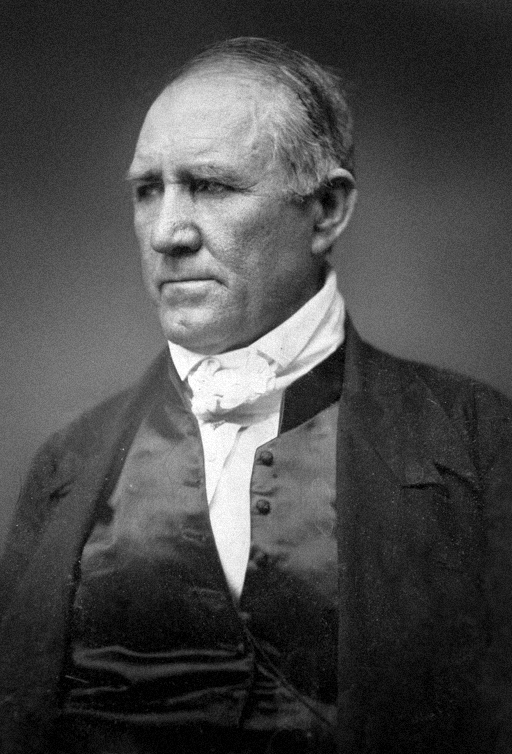
Sam Houston, Co-lon-neh

      File:SHouston 2.jpg

          I enjoyed Tom Brokaw's book, The Greatest Generation, about my parents' generation. Those who lived through the Depression and then fought in World War II were special, but after learning about the people of the early 19th century, I think a better name for Brokaw's book would be "The Greatest Recent Generation." The people of the early 19th century were also a cut above those who followed them. Their courage and self confidence created the world we live in, and in that time of strong men and strong personalities, Sam Houston stands out as one of the strongest.

          Sam Houston was born in Kentucky in 1793. His father died when he was 14, and his mother took him and her 8 other children to a homestead in Tennessee, where she managed a farm and a store. Sam didn't like farm work so he was put to work in the store. Soon tiring of that, he ran away and joined a band of Cherokee Indians, like my great great grandfather Smith Paul. Houston later commented that he preferred the freedom of the Indians to the tyranny of his brothers.

          In his autobiography, Sam Houston describes with great respect the simplicity and virtue of the Cherokee. He learned the Cherokee language and was adopted by their chief, Oo-loo-te-ka, who gave Sam the name Co-lon-neh, the Raven. After three years with the Cherokee Sam returned to his home, and for a while worked as a teacher.

          Houston tried for a while to further his education, but failing geometry he joined the Tennessee militia under Andrew Jackson. He joined just in time to take part in Jackson's massacre of the Creek Red Sticks at Horseshoe Bend in 1814 (see post of October 26, 2010). Unlike David Crockett, who was disgusted by the senseless slaughter, Houston was caught up in the excitement. When the first man over the breast works was shot in the head, Houston followed him and was shot with an arrow in the leg. When the arrow was removed Houston said he was ready to return to the battle. Andrew Jackson himself ordered him to remain in the rear, but Houston not only disobeyed Jackson's order, he volunteered to lead the charge against the Creeks' last bastion. He was shot twice in the shoulder, and then led the charge again. Houston survived in spite of his serious wounds, and his reckless heroism earned Jackson's respect.

          Sam Houston returned home after the Battle of Horseshoe Bend, where he was nursed back to health by his mother. As soon as he was strong enough to ride a horse he went to Washington, DC, and asked to be commissioned into the army. Before he left Tennessee, his mother gave him a ring on which was engraved the word "honor." He wore the ring until his death. After a brief service in New Orleans at the end of the War of 1812 Houston was appointed Cherokee agent. He was able to convince his Cherokee "father," Oo-loo-te-ka or John Jolly, as he was known to white men, to move west to the Indian Territory with his followers. When the guns and blankets that were promised to the Indians weren't delivered, Houston led a group of Cherokees to Washington to complain. When he confronted John Calhoun, the secretary of War, Houston dressed as an Indian, in a blanket and a breechclout. Calhoun reprimanded him for not wearing his military uniform, and accused him of slave trading. Houston resigned his commission.

          Now unemployed, Houston decided to return to Tennessee and to become a lawyer. He may have failed at geometry, but he had always been an avid reader. Houston began to "read" the law in the office of James Trimble in Nashville, Tennessee, and after six months he passed the bar and set up his own law office in Lebanon, Tennessee. There he became a regular visitor of Andrew Jackson who was at home recovering from his own wounds. In Lebanon, Houston ran for the office of prosecuting attorney and won.

          Houston rose quickly in politics. He was elected Major General of the Tennessee militia and then senator. During his term in Congress he was involved in several conflicts including a duel. To remind John Calhoun, still secretary of War, of his previous insult, Houston presented him with a bill for $36 for his expenses as Cherokee agent. After his term in the Senate Houston returned to Tennessee, ran for governor, and won.

          Then something happened for which there has never been a satisfactory explanation. Near the end of his term as governor, Houston married a young woman named Eliza Allen. Three months later he resigned as governor and boarded a steamship for Indian Territory with no other explanation than Eliza had been cold to him.

          Once in Indian Territory, Houston rejoined his Cherokee father John Jolly, and began to drink heavily. Houston's friend Andrew Jackson was now president and Houston began writing letters to him complaining that the Indian agents were cheating the Cherokee out of their annuities, and white settlers were cheating them out of their land. He also was heard to boast that within two years he would conquer Mexico and become emperor of Texas. This sounds a little crazy, even for Sam Houston, but apparently Jackson took him seriously because he shot back a letter asking him not to go ahead with his plan.

          In Indian Territory Houston built a home he called his "wigwam;" he opened a trading post and married a Cherokee woman. In 1829 he became a member of the Cherokee tribe and made a trip to Washington as part of a Cherokee delegation. While he was there he was invited to the White House to visit Andrew Jackson. After recommending to Jackson's Secretary of War, John Eaton, that he fire several Indian agents, he submitted a contract to provide rations for the Removal of the Five Civilized Tribes to Indian Territory. Houston was not awarded the contract, and he returned to his home among the Cherokees.

          While operating his trading post, Houston was investigated by the commanding officer at Fort Gibson, Colonel Matthew Arbuckle, for selling liquor to the Indians, which was illegal. Houston himself had protested to Washington about the illegal liquor traffic to Indian Territory and its damaging effects among the Indians. When confronted with the enormous amount of liquor that he had purchased, Houston swore that all of it was for his personal use. Perhaps he was telling the truth. The Indians had given him a new name, it meant "big drunk" in Cherokee.

          Houston led another Cherokee delegation to Washington in 1831. While he was there William Stanberry of Ohio accused John Eaton of conspiring to give Houston the contract to provide rations for the Removal. Houston challenged Stanberry to a duel, and when Stanberry didn't reply, Houston caught him on the street and beat him with his cane. Houston was six feet six and still a formidable man, in spite of his war injuries. Houston was put on trial by Congress for his attack. The trial lasted for a month and Houston was defended by Francis Scott Key. On the night before the trial's conclusion Houston went out and got drunk, then went to Congress the next morning and in spite of his hangover gave an eloquent speech in his own defense. Congress let Houston off with a $500 fine.

          In 1831, one of the issues which attracted attention in the United States was Texas. After Mexico had won their independence from Spain they had been inviting Americans to come to Texas to settle. The number of settlers had grown to 20,000. The Texans were more loyal to the United States than they were to Mexico and there was much sentiment there for independence. Jackson had made some diplomatic efforts to buy Texas from Mexico but had been rebuffed. While Sam Houston was in Washington going through his spectacular trial, he had also been visiting the President, and they had talked about Texas. There's no record of whether they discussed Houston going to Texas, but this time when Sam Houston left Washington, he didn't return to Indian Territory. He went to Texas and joined a settlement headed by Steven F Austin, apparently deserting his Cherokee wife.

          I think I'll skim over the details of Sam Houston's adventures in Texas. That part of his story is Texas history. He helped inspire Texas' fight for independence; he proved to be a shrewd general in his defeat of Santa Anna at San Jacinto, and when Texas became a republic in 1836, he was elected president. When Texas became a state of the Union, Houston served as a senator and also as governor. When Texas voted to join the confederacy, Houston resigned his position as governor and retired to private life, refusing to fight against the Union. Sam Houston continued to be a colorful character. He never gave up his independent spirit and he was always a friend of the Cherokees.

          Sam Houston made his home in Natchidoches, Texas, close to a peaceful settlement of his old friends, the Cherokees. There was a terrible prejudice among the Texans against Indians, because of the depredations made against them by the plains tribes. It didn't matter to them whether or not the Indians had taken up civilized ways; it didn't matter to them whether or not they were living peacefully with their neighbors. In 1836, Sam Houston went out to Bowles Village, named after the Cherokee leader who had sought safety for his people in Texas twenty years before, and he made a treaty guaranteeing the Cherokees safety on the land that they occupied. In 1837 the Texas legislature refused to ratify the treaty, and in 1839 after Sam Houston had been replaced as President by Mirabeau Lamar, several regiments of Texas militia fell on the 1500 peaceful Cherokees and drove them out of Texas. After all his many accomplishments Houston couldn't protect his lifelong friends, the Cherokees.
Advancing the Frontier, Forman, P 165.

          After I wrote the above summary of Sam Houston's escapades I began to doubt whether it belongs with a group of stories which try to look at history from the Native American point of view. I had first thought of putting it in because Houston's story has always been entertaining to me. He went recklessly from one adventure to another during his life, and he had the strength, the raw courage, and the intelligence to survive, even to succeed.

          But something about the story of Sam Houston bothers me, and maybe it's because his personality highlights the attitudes of the white America of his day. On the one hand he appreciated the Indians' "simplicity." That was the same kind of grudging admiration that was given to blacks at the time. Houston was taken in and protected by the Cherokees as a rebellious teenager, and then proudly took part in the greatest slaughter of Indians in the history of this country. Later when Houston was having marital problems he turned to the Cherokees again, and to alcohol. As the "big drunk" he showed off his celebrity by taking them to Washington, where he tried to take advantage of their misfortune by applying for a contract to provide rations for the Removal, which was second only to the slavery system as the greatest travesty of human rights in our country's history. Then as soon as he got an opportunity for glory in Texas, he abandoned his Indian wife without a second thought.

          I'm not saying that Sam Houston wasn't sincere in his gratitude and admiration for the Cherokee, and I am still entertained by his story, but perhaps the appeal of Sam Houston can give us a little insight into how such men could become heroes in their time, and how such attitudes could be rationalized.
 

Thursday, March 3, 2011

Tustennuggee Emathla, Jim Boy

                                      Tustennuggee Emathla, Jim Boy

          In my last post I told the story of a panic that occurred in the Creek Nation in Indian Territory in 1845, the year my great grandfather was born. There had been a rumor that some of the Creek farms were being attacked by Pani Maha Indians (see post of Feb 28, 2011). The first to respond to the emergency was "Jim Boy" the Creek war chief. Jim Boy immediately left with a band of warriors to rescue the settlement. The report was a false alarm but the threat was real, and during the summer the Creeks acted boldly to negotiate with the hostile plains tribes and war was avoided.

          It's easy, I think, to concentrate on the exciting, dramatic stories of Indian history and forget that the characters in these dramas were just people, with families, doing their best to survive in almost impossible circumstances. I pieced together a few facts about the Creek Chief Jim Boy that illustrate some of the tragedies that he had lived through before the 1845 incident.  

          Jim Boy was born around 1790 or 95, probably in what was to become the state of Alabama. During his childhood white settlers were displacing his people from their homeland, taking their land, and pushing them out of their homes. In 1809 the Shawnee chief Tecumseh visited the Creek towns preaching a new Native American religion. Tecumseh's brother Tenskwatawa had been visited by the Great Spirit in a vision. The Great Spirit had told Tenskwatawa that He had punished the Indian people because they had taken up the ways of the white man. He said that if the Indians would return to the old ways He would help them drive the white man from their land. Tecumseh had left the Creeks with magic red sticks which would make them invincible in battle.

          This was the start of the Creek "Red Stick" movement. Several Creek towns including the one where Jim Boy lived, returned to the old ways by doing away with manufactured goods and returning to hunting. In their fervor the Red Sticks started raiding the homes of Creek nonbelievers who were living like white men. Some of these families fled to Fort Mims, joining white settlers living in the area. Jim Boy, a warrior in his teens called "High Head" in those days, belonged to a band of Red Sticks. The Spanish in Florida, eager to cause trouble for the new United States, were supplying the Red Sticks with ammunition, but at this time the Red Stick war was a civil war among the Creeks.

          When troops from Fort Mims found out about these trips to Florida they ambushed Jim Boy's band on their way home. Jim Boy escaped without harm but the Red Sticks decided to attack Fort Mims in retaliation. The result was a massacre. 300 people were killed, including soldiers, settlers as well as the Creek refugees, who were actually the Red Sticks' targets. Jim Boy was one of the attackers.

          This is when Andrew Jackson got involved. He had organized a band of Tennessee volunteers to fight against the British in the War of 1812, but had been told they weren't needed. The Fort Mims incident gave him an excuse to use his troops, and what resulted was the greatest slaughter of Native American people in the history of the United States. Jackson went from town to town through the Creek domain, slaughtering men, women, and children. Jim Boy and the other Red Sticks fought, but they were outnumbered and outgunned. Thousands of their people were killed. After concluding his rampage with the Battle of Horseshoe Bend (see post dated Oct 26, 2010) Jackson imposed a treaty on the Creeks which took 2/3 of their domain. Even though the majority of the Creeks opposed the Red Sticks, and actually fought with Jackson against their own people, their land was taken too.

          In 1835, when the Seminoles were fighting for their freedom down in the Florida Everglades, the U. S. government enlisted other Indian tribes to fight against them. At this time Jim Boy was known as Tustennuggee Emathla among his people. Tustennuggee was a title meaning task master, awarded to him because of his leadership, and Emathla was his family name. Jim Boy was now a farmer and he had a wife and 9 children. Settlers were threatening his home so he gathered a group of 900 warriors to fight the Seminoles, for the promise that his family would be protected.  

          When Jim Boy and his men returned from Florida, their land had been taken over by white settlers and their families had been rounded up and taken west to Indian Territory, in one of the most brutal of the Removal stories. Not only that, his family had been on the Monmouth, the Mississippi steamship which had blown up with 600 Creek emigrants on board, killing 300. Four of Jim Boy's 9 children were drowned.

          At the time of the Pani Maha incident in Indian Territory Jim Boy was in his 50's. He had led a long life filled with tragedy and disappointment.  

Monday, February 28, 2011

1845


          History, like life, is complicated, and doesn't always fit neatly into discrete stories. The period after the Removal was like that. It was a time of tragedy and change for the Indians. The tribes from the east and the tribes from the west were trying to find a way to survive. There was constant conflict, even between divisions of individual tribes, and constantly changing alliances. The history of the period consists of hundreds of stories, many of which we will never hear. The following two stories will hopefully give some idea of what the situation was like in Indian Territory the year my great grandfather was born.

          After their Removal in 1837, the Chickasaws lived for several years in the Choctaw domain, mainly in camps near the supply depots established to distribute their first year's rations. It wasn't safe to move into their own land to the west because the plains Indian tribes who lived and hunted there weren't willing to give up their home without a fight. The closest fort, Ft. Towson, was 70 miles to the east, so it offered little protection for the Chickasaws.

          My great great grandmother, Ela Teecha, "Ellen," and her first husband Jason McClure (see post of Dec 22, 2011) were among 12 Chickasaw families who moved into the Chickasaw domain in 1839. They settled on the Blue River just east of the Washita. There was a settlement of Kickapoo Indians nearby, and soldiers were sent down from Fort Gibson to evict them, but the Kickapoos moved right back. In 1842 construction was begun on Fort Washita, just five miles west of the McClure farm. The fort was built to provide protection for the Chickasaws from raids by the plains tribes, but it wasn't completed until 1844. In the meantime the Chickasaw families were on their own. According to stories handed down in the family, Ellen advised her husband not to fight or barricade the doors when those "horse riding Indians" came, but just to "go out and offer to feed them, because they are always hungry and they will eat and if they eat there will be no trouble."      

          As near as I can tell, Jason McClure died in 1842, and in 1844, the year that Fort Washita opened, Ellen married my great great grandfather, Smith Paul. The trouble with the plains Indians continued. In 1845, the year my great grandfather, Sam Paul, was born, there were several raids on Chickasaw settlements in the area in spite of the fort. One of these raids was on a settlement six miles from Fort Washita, almost surely my great great grand parents' farm. After these attacks, Chickasaw leaders called a meeting to plan for the defense of their settlements, and Major Beall, the commander of Ft. Washita, having sent out all his available units to search for the marauders, asked for reinforcements from Ft. Towson.

          In the mean time the Chickasaw agent, Col. A. M. M. Upshaw, sent some Delaware warriors to the Wichita village to retrieve the horses. The Delawares found the Wichita Village burned, with dead bodies lying everywhere. A band of Pani Maha, an indigenous tribe which wreaked havoc on the plains for several years, had attacked the village while the Wichita warriors were away on a hunt.

          The Creek immigrants were also having problems. In February of 1845 a group of Creek Indians surprised some Pani Maha near Edwards Trading Post. The Pani Maha shot arrows at the Creeks, who replied with gun fire, killing four Pani Maha. Word of the incident spread like wild fire. It was followed by a rumor that 500 Pani Maha were massacring Creeks settled along the Verdigris River. A war party was sent out under Jim Boy, the famous Creek war chief, to rescue the settlers. The next news was that Jim Boy's warriors had been repulsed. Principal Chief McIntosh then sent out reinforcements, and requested troops from Fort Gibson. A company of Dragoons under Nathan Boone, son of Daniel Boone, was sent out from the fort. Meanwhile Creek farmers living along the Verdigris began to flee for the safety of the fort.

          The situation was described by the Creek agent James Logan, who also fled to Fort Gibson:

          I should not previously have believed the Creeks to be so excitable a people. In extenuation, however, it may be said that they knew no mercy would be shown by the invaders. Everything was in the greatest possible confusion. Here was to be seen a crowd of the poorer class of women on foot, loaded down with their children and bundles containing their valuables; here a line of wagons laden with the property of the richer class … and their families on horse back; there a warrior begrimed with paint, rifle and tomahawk in hand, making the welkin ring with the discordant war whoop! The rivers were literally covered with canoes laden with women, children, etc., all wending their way to Fort Gibson; here they all congregated, conceiving themselves secure under its protection.

          As Captain Boone rode out to assist the Creek war parties, he met Chief McIntosh who was coming back. McIntosh reported that the settlements were safe, and that there had been no attack. The whole incident was a product of the imagination of the frightened settlers.

          The Pani Maha attack was indeed a false alarm, but the plans of the plains tribes to attack the immigrant tribes was not. When the Creeks sent out an invitation to the Comanche to attend a peace council later that summer, the Comanche replied that they were already planning to meet with the other plains tribes at the next full moon. The purpose of that meeting was to plan a coordinated attack on the Creeks and on the Chickasaws, the two immigrant tribes whose settlements extended furthest west. The Creek messengers were seized and would have been put to death had it not been for the brave intervention of Echo Harjo, a Creek warrior who spoke Comanche. Harjo went to the Comanche camp and successfully pled for the messengers' release.

          The Creeks sent a message to the council of plains tribes by their neighbors the Osage, who had been invited to attend. The message, delivered by Black Dog, the great Osage chief, was that the Creeks wanted peace but they would fight if needed. Black Dog went on to advise the western tribes against arousing the Creeks, the most powerful of the immigrant tribes.

          The Creeks hosted their own council that summer, which was also attended by the Chickasaws. Peace with the plains tribes was not won in a single council, but at least the Five Civilized Tribes were earning respect. Not only were they formidable foes, they were also better able to deal with the white man.  


Sunday, February 20, 2011

The Comanche

                                   Comanche Horsemanship, George Catlin


          To begin with, I want to acknowledge that I'm no expert on the Comanche. I've only come across a few bits of information about them over the years, but what I've learned fascinates me. In my last post I told the stories of Cynthia Parker, who, kidnapped by Comanches as a child, grew so attached to them that after she was "rescued" she begged to return, and the story of her son, Quanah Parker, who transformed himself from the leader of the most feared band of Comanche warriors, to a successful rancher, respected by his neighbors and friend of President Theodore Roosevelt.

          Lately I've been rereading some excerpts from the journal of Captain R. B. Marcy who spent 30 years stationed on the frontier in the early 1800's. His descriptions and his understanding was not from the Comanche perspective, which makes a difference, but he did sympathize with the Indians, and he was fascinated by the Comanche.

          The following excerpt from Marcy's journal describes the horsemanship of the Comanche. I first read it several years ago and it still amazes me. He first describes the horsemanship of the Comanche brave:

          He is in the saddle from boyhood to old age, and his favorite horse is his constant companion. It is when mounted that the Comanche exhibits himself to the best advantage: here he is at home, and his skill in various manoeuvres which he makes available in battle - such as throwing himself entirely upon one side of his horse, and discharging his arrows with great rapidity towards the opposite side beneath the animal's neck while he is at full speed - is truly astonishing.

          Even more amazing is Marcy's description of the display of skill of two young Comanche girls that Marcy witnessed himself:

          Many of the women are equally expert, as equestrians, with the men. They ride upon the same saddles in the same manner, with a leg upon each side of the horse. As an example of their skill in horsemanship, two young women of one of the bands of Northern Comanche, while we were encamped near them, upon seeing some antelopes at a distance from their camp, mounted horses, and with lassos in their hands set off at full speed in pursuit of this fleetest inhabitant of the plains. After pursuing them for some distance, and taking all the advantages which their circuitous course permitted, they finally came near them, and - throwing the lasso with unerring precision, secured each an animal and brought it back in triumph to the camp. 

          Every time I see a herd of prong horned antelope standing by the road, I think of this story. Once or twice I've stopped the car and walked toward these beautiful creatures and watched as they loped easily away, launching themselves like arrows through the air. It's hard to imagine running one down on a horse, let alone lassoing one. Certainly, of all the animals I've seen, they are the fleetest of foot. 

          Marcy went on to describe the nomadic life of the Comanche, their simple needs and their dependence on the buffalo for food shelter and clothing. He told how their chiefs were chosen for bravery and skill in battle, and were quickly removed for any display of cowardice or poor judgment.

          In spite of the Comanches' reputation for ferocity in battle, Marcy described them as being

… hospitable and kind to all with whom they are not at war; and on the arrival of a stranger at their camps, a lodge is prepared for him, and he is entertained as long as he chooses to remain with them. They are also kind and affectionate to each other, and as long as anything comestible remains in the camp, all are permitted to share alike.

          Marcy continues to describe the hospitality of the Comanche, relating an experience of his own:

          The manner in which they salute a stranger is somewhat peculiar, as my own reception at one of their encampments will show. The chief at this encampment was a very corpulent old man, with exceedingly scanty attire, who, immediately on our approach, declared himself a great friend of the Americans, and persisted in giving me evidence of his sincerity by an embrace, which, to please him, I forced myself to submit to, although it was far from agreeable to my own feelings. Seizing me in his brawny arms while we were yet in the saddle, and laying his greasy head upon my shoulder, he inflicted upon me a most bruin-like squeeze, which I endured with a degree of patient fortitude worthy of the occasion; and I was consoling myself upon the completion of the salutation, when the savage again seized me in his arms, and I was doomed to another similar torture, with his head upon my other shoulder, while at the same time he rubbed his greasy face against mine in the most affectionate manner; all of which proceeding he gave me to understand was to be regarded as a most distinguished and signal mark of affection for the American people in general, and in particular for myself, who, as their representative, can bear testimony to the strength of his attachment. On leaving camp, the chief shook me heartily by the hand, telling me at the same time, that he was not a Comanche, but an American; and as I did not feel disposed to be outdone in politeness by an Indian, I replied in the same spirit, that there was not a  drop of Anglo-Saxon blood in my veins, but that I was wholly and absolutely a Comanche, at which he seemed delighted, duly understanding and appreciating the compliment.  

          In spite of his patronizing tone, I enjoyed reading Marcy's description of the old chief's attempt to make him feel welcome.

          Marcy lamented the effect on the Comanche of the extinction of the buffalo, which was approaching rapidly in 1853, the date of his report. Thousands of buffalo were being slaughtered every year,

          …for their skins, and often for their tongues alone; animals whose flesh is sufficient to afford sustenance to a large number of men are sacrificed to furnish a 'bon bouche' for the rich epicure….It is only eight years since the western borders of Texas abounded with buffaloes; but now they seldom go south of Ted River, and their range upon east and west has also been very much contracted within the same time; so that they are at present confined to a narrow belt of country between the outer settlements and the base of the Rocky Mountains. With this rapid diminution in their numbers, they must in the course of a very few years become exterminated. What will then become of the prairie Indian, whom as I have already remarked, relies for subsistence, shelter, and clothing, on the flesh and hide of this animal. He must either perish with them, increase his marauding depredations on the Mexicans, or learn to cultivate the soil. 

(The above descriptions by Captain Marcy are taken from a report he submitted to Jefferson Davis, Secretary of War for the United States, in 1853. See Advancing the Frontier, by Grant Foreman, Chapter 16.)

Saturday, February 12, 2011

Nadua, Cynthia Ann Parker


                                         Nadua, Cynthia Ann Parker

          In December of 1860 the Texas Rangers made a surprise attack on 20 Comanche Indians who they believed had been raiding settlements in the area.  As the Comanche fled, the Rangers cut them down. One woman carrying a baby was spared. Her name was Nadua. Her husband was Peta Nocona, a great Comanche chief, and her son was Quanah Parker, the last chief of the Comanche.

          The relentless westward expansion of white settlers displaced, one by one, the Native American tribes from their homelands. Hundreds of tribes were crowded together onto land depleted of the game they depended on for survival. Relationships between tribal groups that had developed over centuries were disrupted, leading to wars among the tribes. An endless series of broken promises convinced the Indians that the word of the white man could not be trusted. Native Americans dealt with their dilemma in various ways: by trying to adopt the white man's ways, by trying to escape by moving further west, and by retaliation. The Comanche chose the latter.

          During the 1830's the Comanche lead an effort to create an Indian alliance, as had the Shawnee chief Tecumseh and the Sauk chief Black Hawk. One of the leaders of this movement was Nadua's husband Peta Nocona. Peta was the son of another Comanche chief, Iron Jacket, of whom it was said he could blow bullets away with his breath.

          In 1833, a white settler named John Parker brought his family down from Illinois to east Texas. He built a fort, made friends with some of the local Indian Tribes, and began farming. What he didn't realize was that he had settled in Comanche country. In 1836, a band of Comanche, led by Chief Nocona, attacked the Parker settlement. Five men were killed, and six women and children were taken hostage.

          Among the hostages were Cynthia Ann Parker, age 9, and her brother John, age 5. Eventually all the hostages were ransomed except for Cynthia Ann, who was given the name Nadua, 'someone found,' in the Comanche language. Chief Nocona married Nadua, and they had three children together: two boys Quanah (Fragrance) and Pecos (Pecan), and a girl Topsanna (Prairie Flower). Nocona's affection for Nadua was so great that he never took another wife unlike most chiefs of his rank.

          At the time of the 1860 attack on Chief Nocona's band, the chief and his son Quanah were away hunting. Sull Ross, commander of the Texas Ranger unit which massacred the little group of Comanches, claimed to have killed Chief Nocona. Ross made a lot of his victory over the little band of Comanches, claiming that it put an end to the "great Comanche confederacy." It earned him the notoriety that later got him elected Governor or Texas.

          The other claim made by Ross was that he had rescued the long lost captive of the Comanche, Cynthia Ann Parker. Soon after Nadua's capture by Ross, one of his men noticed that her eyes were blue. After much questioning Ross managed to connect Nadua, who had forgotten how to speak English, with the Fort Parker massacre 25 years before. Nadua was returned to her white family, and when her uncle Isaac Parker mentioned that his niece Cythia had been captured by the Comanches, Nadua said: "me Cincee Ann." Although her family tried to make her feel at home, Nadua begged them to let her rejoin her Indian family, and she tried several times to escape. Four years after her capture, Nadua's daughter Prairie Flower died of pneumonia. After that Nadua stopped eating and soon she sickened and died.

          Nadua's husband Nocona also died soon after his wife and daughter were captured. According to his son Quanah he died of injuries he had sustained years before in a battle with the Apache.


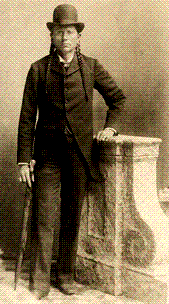
                                                  Quanah Parker

          Quanah Parker lived until 1911. He had five wives and 25 children. After his father's death he became a great warrior and a great chief in his own right. He led the largest band of Comanche to remain free until in 1875, he was finally defeated at the Battle of Palo Duro Canyon. Soon after he and his his warriors surrendered and were forced to go to the Comanche reservation in southeastern Oklahoma where he was chosen chief over all the Comanche.

          Once in Indian Territory, Quanah Parker adapted well to the white culture. He took his mother's surname of Parker, and became a successful rancher. He included among his friends Theodore Roosevelt. He rode in Roosevelt's inaugural parade and Roosevelt visited Parker at his home in Oklahoma where they went hunting together.

          Quanah Parker was loyal to his Indian heritage. He helped found the Native American Church, an attempt to join together Christian and Indian traditions. Quanah was also loyal to his family. He became acquainted with his white family and before his death retrieved the remains of his mother and sister, and buried them near his home in Oklahoma.  


                                                      Quanah Parker