Showing posts with label Cherokee History. Show all posts

Tuesday, March 8, 2011

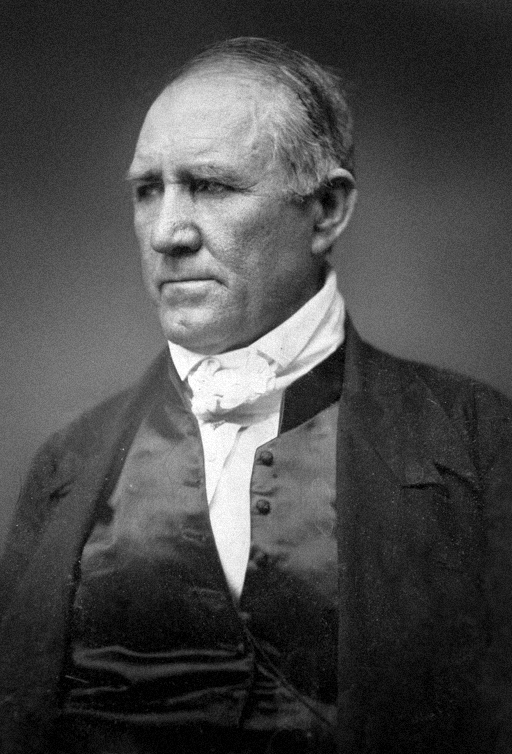
Sam Houston, Co-lon-neh

      File:SHouston 2.jpg

          I enjoyed Tom Brokaw's book, The Greatest Generation, about my parents' generation. Those who lived through the Depression and then fought in World War II were special, but after learning about the people of the early 19th century, I think a better name for Brokaw's book would be "The Greatest Recent Generation." The people of the early 19th century were also a cut above those who followed them. Their courage and self confidence created the world we live in, and in that time of strong men and strong personalities, Sam Houston stands out as one of the strongest.

          Sam Houston was born in Kentucky in 1793. His father died when he was 14, and his mother took him and her 8 other children to a homestead in Tennessee, where she managed a farm and a store. Sam didn't like farm work so he was put to work in the store. Soon tiring of that, he ran away and joined a band of Cherokee Indians, like my great great grandfather Smith Paul. Houston later commented that he preferred the freedom of the Indians to the tyranny of his brothers.

          In his autobiography, Sam Houston describes with great respect the simplicity and virtue of the Cherokee. He learned the Cherokee language and was adopted by their chief, Oo-loo-te-ka, who gave Sam the name Co-lon-neh, the Raven. After three years with the Cherokee Sam returned to his home, and for a while worked as a teacher.

          Houston tried for a while to further his education, but failing geometry he joined the Tennessee militia under Andrew Jackson. He joined just in time to take part in Jackson's massacre of the Creek Red Sticks at Horseshoe Bend in 1814 (see post of October 26, 2010). Unlike David Crockett, who was disgusted by the senseless slaughter, Houston was caught up in the excitement. When the first man over the breast works was shot in the head, Houston followed him and was shot with an arrow in the leg. When the arrow was removed Houston said he was ready to return to the battle. Andrew Jackson himself ordered him to remain in the rear, but Houston not only disobeyed Jackson's order, he volunteered to lead the charge against the Creeks' last bastion. He was shot twice in the shoulder, and then led the charge again. Houston survived in spite of his serious wounds, and his reckless heroism earned Jackson's respect.

          Sam Houston returned home after the Battle of Horseshoe Bend, where he was nursed back to health by his mother. As soon as he was strong enough to ride a horse he went to Washington, DC, and asked to be commissioned into the army. Before he left Tennessee, his mother gave him a ring on which was engraved the word "honor." He wore the ring until his death. After a brief service in New Orleans at the end of the War of 1812 Houston was appointed Cherokee agent. He was able to convince his Cherokee "father," Oo-loo-te-ka or John Jolly, as he was known to white men, to move west to the Indian Territory with his followers. When the guns and blankets that were promised to the Indians weren't delivered, Houston led a group of Cherokees to Washington to complain. When he confronted John Calhoun, the secretary of War, Houston dressed as an Indian, in a blanket and a breechclout. Calhoun reprimanded him for not wearing his military uniform, and accused him of slave trading. Houston resigned his commission.

          Now unemployed, Houston decided to return to Tennessee and to become a lawyer. He may have failed at geometry, but he had always been an avid reader. Houston began to "read" the law in the office of James Trimble in Nashville, Tennessee, and after six months he passed the bar and set up his own law office in Lebanon, Tennessee. There he became a regular visitor of Andrew Jackson who was at home recovering from his own wounds. In Lebanon, Houston ran for the office of prosecuting attorney and won.

          Houston rose quickly in politics. He was elected Major General of the Tennessee militia and then senator. During his term in Congress he was involved in several conflicts including a duel. To remind John Calhoun, still secretary of War, of his previous insult, Houston presented him with a bill for $36 for his expenses as Cherokee agent. After his term in the Senate Houston returned to Tennessee, ran for governor, and won.

          Then something happened for which there has never been a satisfactory explanation. Near the end of his term as governor, Houston married a young woman named Eliza Allen. Three months later he resigned as governor and boarded a steamship for Indian Territory with no other explanation than Eliza had been cold to him.

          Once in Indian Territory, Houston rejoined his Cherokee father John Jolly, and began to drink heavily. Houston's friend Andrew Jackson was now president and Houston began writing letters to him complaining that the Indian agents were cheating the Cherokee out of their annuities, and white settlers were cheating them out of their land. He also was heard to boast that within two years he would conquer Mexico and become emperor of Texas. This sounds a little crazy, even for Sam Houston, but apparently Jackson took him seriously because he shot back a letter asking him not to go ahead with his plan.

          In Indian Territory Houston built a home he called his "wigwam;" he opened a trading post and married a Cherokee woman. In 1829 he became a member of the Cherokee tribe and made a trip to Washington as part of a Cherokee delegation. While he was there he was invited to the White House to visit Andrew Jackson. After recommending to Jackson's Secretary of War, John Eaton, that he fire several Indian agents, he submitted a contract to provide rations for the Removal of the Five Civilized Tribes to Indian Territory. Houston was not awarded the contract, and he returned to his home among the Cherokees.

          While operating his trading post, Houston was investigated by the commanding officer at Fort Gibson, Colonel Matthew Arbuckle, for selling liquor to the Indians, which was illegal. Houston himself had protested to Washington about the illegal liquor traffic to Indian Territory and its damaging effects among the Indians. When confronted with the enormous amount of liquor that he had purchased, Houston swore that all of it was for his personal use. Perhaps he was telling the truth. The Indians had given him a new name, it meant "big drunk" in Cherokee.

          Houston led another Cherokee delegation to Washington in 1831. While he was there William Stanberry of Ohio accused John Eaton of conspiring to give Houston the contract to provide rations for the Removal. Houston challenged Stanberry to a duel, and when Stanberry didn't reply, Houston caught him on the street and beat him with his cane. Houston was six feet six and still a formidable man, in spite of his war injuries. Houston was put on trial by Congress for his attack. The trial lasted for a month and Houston was defended by Francis Scott Key. On the night before the trial's conclusion Houston went out and got drunk, then went to Congress the next morning and in spite of his hangover gave an eloquent speech in his own defense. Congress let Houston off with a $500 fine.

          In 1831, one of the issues which attracted attention in the United States was Texas. After Mexico had won their independence from Spain they had been inviting Americans to come to Texas to settle. The number of settlers had grown to 20,000. The Texans were more loyal to the United States than they were to Mexico and there was much sentiment there for independence. Jackson had made some diplomatic efforts to buy Texas from Mexico but had been rebuffed. While Sam Houston was in Washington going through his spectacular trial, he had also been visiting the President, and they had talked about Texas. There's no record of whether they discussed Houston going to Texas, but this time when Sam Houston left Washington, he didn't return to Indian Territory. He went to Texas and joined a settlement headed by Steven F Austin, apparently deserting his Cherokee wife.

          I think I'll skim over the details of Sam Houston's adventures in Texas. That part of his story is Texas history. He helped inspire Texas' fight for independence; he proved to be a shrewd general in his defeat of Santa Anna at San Jacinto, and when Texas became a republic in 1836, he was elected president. When Texas became a state of the Union, Houston served as a senator and also as governor. When Texas voted to join the confederacy, Houston resigned his position as governor and retired to private life, refusing to fight against the Union. Sam Houston continued to be a colorful character. He never gave up his independent spirit and he was always a friend of the Cherokees.

          Sam Houston made his home in Natchidoches, Texas, close to a peaceful settlement of his old friends, the Cherokees. There was a terrible prejudice among the Texans against Indians, because of the depredations made against them by the plains tribes. It didn't matter to them whether or not the Indians had taken up civilized ways; it didn't matter to them whether or not they were living peacefully with their neighbors. In 1836, Sam Houston went out to Bowles Village, named after the Cherokee leader who had sought safety for his people in Texas twenty years before, and he made a treaty guaranteeing the Cherokees safety on the land that they occupied. In 1837 the Texas legislature refused to ratify the treaty, and in 1839 after Sam Houston had been replaced as President by Mirabeau Lamar, several regiments of Texas militia fell on the 1500 peaceful Cherokees and drove them out of Texas. After all his many accomplishments Houston couldn't protect his lifelong friends, the Cherokees.
Advancing the Frontier, Forman, P 165.

          After I wrote the above summary of Sam Houston's escapades I began to doubt whether it belongs with a group of stories which try to look at history from the Native American point of view. I had first thought of putting it in because Houston's story has always been entertaining to me. He went recklessly from one adventure to another during his life, and he had the strength, the raw courage, and the intelligence to survive, even to succeed.

          But something about the story of Sam Houston bothers me, and maybe it's because his personality highlights the attitudes of the white America of his day. On the one hand he appreciated the Indians' "simplicity." That was the same kind of grudging admiration that was given to blacks at the time. Houston was taken in and protected by the Cherokees as a rebellious teenager, and then proudly took part in the greatest slaughter of Indians in the history of this country. Later when Houston was having marital problems he turned to the Cherokees again, and to alcohol. As the "big drunk" he showed off his celebrity by taking them to Washington, where he tried to take advantage of their misfortune by applying for a contract to provide rations for the Removal, which was second only to the slavery system as the greatest travesty of human rights in our country's history. Then as soon as he got an opportunity for glory in Texas, he abandoned his Indian wife without a second thought.

          I'm not saying that Sam Houston wasn't sincere in his gratitude and admiration for the Cherokee, and I am still entertained by his story, but perhaps the appeal of Sam Houston can give us a little insight into how such men could become heroes in their time, and how such attitudes could be rationalized.
 

Saturday, February 5, 2011

The International Council of 1843


          The International Council of 1843, John Mix Stanley


          In 1826 federal commissioners made the following promise to the Chickasaws:

          Your Father the President proposes to give his Chickasaw children a fine tract of country on the other side of the Mississippi River... By removing to that country, you will be freed from the intrusions and interruptions of your white brethren. You will then be enabled to live in peace and quietness...The Government will guarantee to you and your children forever the possession of your country, and will protect and defend you against all your enemies.

          When the Chickasaws and other "civilized" tribes arrived in Indian Territory, the situation in the Territory was chaotic. The U. S. Army's heroic expedition of 1834, described in Gunpandama, Part 2, posted Jan. 30, 2011, had little effect on the turmoil. On the return of the 1834 expedition, the Osage Chief, Black Dog, demanded additional payment for their hostage Gunpandama, saying that if they weren't paid they would send a war party to recapture her. Col. Dodge paid them out of his own money. When the representatives of the western tribes came to Fort Gibson later in 1834, they were not impressed by the power of the United States military. A Kiowa chief was surprised that the U. S. soldiers did not have more horses. Some of the delegates from the western tribes died on the way home and later claimed that they had been poisoned by lightning shooting from the eyes of one of the US commissioners - he wore glasses.

          The Osage continued to raid the farms of the Creek and Cherokee, and the Comanche and Kickapoo raided the Chickasaw and Choctaw. The western tribes complained because the Creeks were hunting buffalo on the prairie. It was the opinion of the Pani-maha that the stench of the Creeks was driving the buffalo away. The Pawnee and Caddo attacked the Wichita. The Delaware stole horses from the Comanche. The Comanche were at war with Osage.  The Kansan were at war with the Pawnee. The Kickapoo and Osage were at war with the Pani-maha.

          In addition to these conflicts, Black Hawk was trying to recruit the western tribes to join his war against the white settlers in Illinois. In 1837 the U. S. government promised the Choctaws $272 to go to Florida and fight the Seminoles, and then they reneged, leaving a large number of Choctaw warriors ready to fight. These warriors started negotiating with the Mexican government to fight against the rebellious white settlers in Texas in exchange for land. The Comanches and other tribes were raiding white settlements in Texas, and also trying to form an alliance of tribes to wage a general war on the United States. The Texans, convinced that no Indians were to be trusted, raided Chickasaw and Choctaw farms in Indian Territory, and in 1839 the Texas Rangers attacked a settlement of peaceful Cherokee farmers at Natchitoches, killing 100 and sending the remaining 1500 fleeing for their lives. The Chickasaws did what they could to help these miserable refugees as they crossed their domain on the way to join their kinsmen in Indian Territory.

          The Five Civilized Tribes had taken advantage of some of the benefits of civilization, but they hadn't forgotten their roots. At the time of the Removal they were already familiar with some of the tribes in the west. Their hunting parties had been making trips west for many years because of the lack of game in their eastern domains, and large groups of Cherokees and also Creeks had settled there before the rest of their people were forced to follow them.

          While the U. S. Government was saber rattling and making fools of themselves, the immigrant tribes were approaching their western brothers with respect and diplomacy. They hosted many conferences and made many agreements independent of the government's bungling efforts. One of these conferences was the International Council of 1843, or the Council of 18 Tribes.

          The Council was held on the Cherokee Council Grounds, built in 1839 on the site of the present town of Tahlequah, Oklahoma. The Council Grounds were used for meetings of the Cherokee legislature and for general meetings of Cherokee citizens. In preparation for the Council of 18 Tribes, the Cherokees had built 30 cabins to accommodate the visitors in addition to two larger buildings which were used by the Cherokee legislature. They also constructed a large shed roofed with three foot boards split by hand for the Council sessions. Messengers had been sent out with wampum to 36 tribes, from the far north to the Rocky Mountains. 18 tribes attended: The Chickasaw, Choctaw, Cherokee, Creek and Seminole, Osage, Delaware, Shawnee, Kickapoo, Iowa, Potawatomi, Chippewa, Stockbridge, Wichita, Piankashaw, Miami, Seneca, Peoria, and Ottawa. In accordance with tradition, the tribes didn=t just send representatives, they came in large groups. 3000 - 4000 gathered each day to attend the sessions.

          Representatives of the U. S. Government were invited, among them General Zachary Taylor, commander of Fort Washita, and Pierce Butler, the Cherokee agent. Some of the white people seemed puzzled by the Indians' initiative. The Agent Butler wrote in a letter to the commissioner of Indian Affairs:

          As far as I can learn their object, it is to renew old customs and friendships and to enact some international laws for the government of each and all.  


                               Black Dog, Osage Chief

          Prominent leaders from each tribe attended. Some notables included ninety year old Chief Wau-bon-sa, of the Potawatomi, who came all the way from Iowa. Pah-que-sah-ah, son of Tecumseh, represented the Shawnee. Big Soldier, an Osage who had spent 3 yrs in Europe, was there. He had medal that had been given to him by Lafayette. Another Osage attending the council, Black Dog, was almost 7 ft tall. The painter John Mix Stanley painted portraits of the leaders, and a large painting of the gathering which is now displayed at the Smithsonian Institute. 

          The Cherokees, hosts of the conference, provided food for all. A Methodist missionary gave sermons on Saturdays and Sundays. Also on Saturdays there were stick ball games. There was trading and bartering between the tribes. The Cherokees destroyed 1700 gallons of whiskey in order to prevent drunkenness.  One evening the Iowas began a procession that was soon joined by many. The Iowas led the procession around the entire gathering, singing and dancing and playing on flutes at each campsite, giving a loud whoop at the end of each performance before moving on to the next camp.    

          The thousands of Indians were dressed in their best finery. The men=s faces were painted, and the men and women=s hair was adorned by feathers. Some wore hats or turbans on their heads. Ornaments were worn in the nose and ears. The clothing was varied and colorful, from calico hunting shirts and pantaloons, to beaded buckskin leggings or dresses, to simple breechclouts. Colorful sashes, shawls, and blankets were in abundance. The Iowas wore little bells that jingled when they walked.

          The conference lasted four weeks. Meetings started about 3 o=clock in the afternoon, and were held with great dignity. The Chiefs sat in a great circle with the Delaware, acknowledged to be the most ancient tribe, occupying a favored place. A table was placed in the center for wampum and peace pipes. There were interpreters for each tribe, and each speech was translated, sentence by sentence, the speaker waiting until each tribe signaled understanding before he continued. John Ross, chief of the Cherokee, was the first to speak:

          Brothers, when we look back to the history of our race we see some green spots that are pleasing to us. We also see many things to make our hearts sad. When we look back on the days when the first council fires were kindled, around which the pipe of peace was smoked, we are grateful to our Creator for having united the hearts of the red men in peace; for it is in peace only that our women and children can enjoy happiness and increase in numbers. By peace our condition has been improved in the pursuits of civilized life. We should, therefore, extend the hand of peace from tribe to tribe, till peace is established between every nation of red men within the reach of our voice.  

          Brothers, when we call to mind the early associations which endeared us to the land that gave birth to our forefathers, where we were brought up in peace to taste the blessings of civilized life; when we see that our fires have there been extinguished, and our families been removed to a new and distant home, we can not but feel sorry. But the designs of Providence are mysterious: and we should not, therefore, despair of once more enjoying the blessings of peace in our new home.

          Brothers, by this removal tribes hitherto distant from each other have become
neighbors, and those hitherto unacquainted have become known to each other. There are, however, numerous other tribes with whom we are still strangers.

          Brothers, it is for renewing in the West the ancient talk of our forefathers, and of perpetuating forever the old pipe of peace, and of extending them from nation to nation, and of adopting such international laws as may redress the wrongs done by the people of our respective tribes to each other, that you have been invited to attend the present Council. Let us, therefore, so act that the peace which existed between our forefathers may be pursued, and that we may always live as members of the same family.

          Many others followed in addressing the group. One of the most notable being George Lowery, second chief of the Cherokee, who related a legend about how peace between the tribes had first been devised. He told of how a Shawnee messenger had come to the Cherokee, in a place also known as Tah-le-quah. According to the legend, the Shawnee messenger had started a fire which was to burn for eternity, and was to symbolize an agreement between the tribes to live together in peace. The messenger had left the fire with the Cherokee, who were then responsible for sharing this Atalk@ among all tribes.

          The delegates signed a treaty, pledging friendship, abjuring revenge and retaliation, and agreeing on the need to establish separate territories for each tribe in order that their people might improve in agriculture, manufacture and domestic arts. They also pledged not to cede any lands to the United States without the consent of the other tribes. There were clauses providing for punishment of offenders between tribes, and for extradition of offenders and restoration of stolen goods. They also agreed to repress the use of spirits, and not to introduce them into each other=s nations.


                       Osage Scalp Dance, John Mix Stanley


          The patience and bravery of the leaders of the Five Civilized Tribes is illustrated by an event which took place just two months following the end of the Council of 18
Tribes. Again it was the Osage who caused the trouble. The Osage had long been engaged in a war with the Pani-maha tribe, who incidentally had not attended the peace conference. When the Osage chief, Black Dog, found out that a group of Pani-maha had traded most of their guns to the Comanches and were unarmed, he sent out a war party against them. The party brought back 9 scalps and a woman captive. Black Dog then invited the Kickapoos to join him in continuing the war. Chief Roley McIntosh, of the Creeks, went personally to the Kickapoo camp, and bravely interrupted their war dance to remind them of their obligations under the treaty. He managed to convince them to agree to attend another conference at the Creek Council grounds in September to settle their differences with the Pani-maha, and he immediately sent out runners to invite the other tribes. 

          The immigrant tribes understood their western brothers. They knew what formalities needed to be followed in Councils to insure that every participant was shown the respect due to the leader of a nation. They understood that the relationships between Native American nations required more than just treaties. Each tribe needed guarantees that they would be secure from attack, and that they would have access to the game, corn and other supplies they needed to survive. They knew that required regular meetings and changes in agreements to fit the constantly changing situation.

          The efforts of the immigrant tribes to promote peace certainly prevented many deaths, not only among their own people but also among the white settlers.

Monday, January 24, 2011

Gunpandama


Wun-pan-to-mee (the white weasel), a girl; and Tunk-aht-oh-ye (the thunderer), a boy; who are brother and sister. As described by the artist, George Catlin, the two are Kioways (sic)who were purchased from the Osages, to be taken to their tribe by the dragoons (with whom Catlin was traveling in the 1830s-1840s.).


          In the Smithsonian museum there are several buffalo hides inscribed with pictures, pictures of warriors, pictures of soldiers. These hides represent a sixty year history of a band of Kiowa Indians living in western Indian Territory during the early 1800's. One of these hides contains the image of a severed head with a knife sticking into it. On the section of hide representing the following year is the figure of a small girl. That girl's name was Gunpandama.  
(George Catlin recorded the young lady's name as Wun-pan-to-mee but the U.S Bureau of Ethnology spells it Gunpandama.)

          During the migration of the Five Civilized Tribes to Indian Territory in the 1830's there were several failed attempts by the United States' Army to negotiate peace with the dozens of Indian tribes already occupying the area.

          In an attempt to prevent trouble for the migrating Choctaws, two expeditions were sent out in 1832 by the commanding officer of Ft Gibson, Col Matthew Arbuckle, to make contact with the hostile plains Indians. The first group under Captain Jesse Bean was accompanied by the author, Washington Irving, who chronicled the expedition in A tour of the Prairies. The soldiers encountered only friendly tribes, and had to turn back less than halfway into their journey because of winter.

          Later that same year, Col Arbuckle sent another contingent of troops up the Red, Washita and Canadian Rivers, to drive the Comanches and Wichitas west, and to invite their chiefs to come to Ft Gibson where they might be impressed by the power of the United States. The Indians were evidently not impressed. The only contact made by the troops was when a band of Indians rode up and kidnapped one of the rangers, George Abbay. The troops were unable to catch the Indians although they pursued them for 12 days. The soldiers finally ran out of food and had to turn back. The expedition lasted for 54 days. For the last 30 days the men subsisted solely on buffalo meat. 

          In addition to the problem of the western plains tribes, who were not only raiding the Choctaws in the southern part of Indian Territory and plundering with impunity caravans headed west to Santa Fe, there was also a threat to the immigrant tribes in the north, the Osages. The Osage tribe, as I mentioned in my post of 1/1/2011, had been lured into the Arkansas River valley by fur traders during the previous century. Recently the fur trade was waning, and not only that, the Osage were being pushed off their land because U. S. commissioners, due either to ignorance or thoughtlessness, had promised it to the immigrant tribes, the Creeks and Cherokees. The Osage people were starving so they took to raiding Creek and Cherokee farms to feed themselves. The federal government reacted by withholding their annuity, which only increased the problem. 

          In addition to these blunders, the areas promised to the Creek and Cherokee tribes overlapped, so another team of commissioners was sent to revise the treaties and to resolve this three way conflict. This was how Washington Irving came to be invited to go with Captain Bean's expedition. He had come to Indian Territory with one of the commissioners to learn more about the Indians. 

          When the three tribes met, the Osage leaders received no concessions from the commissioners. After hearing the news, a party of warriors, frustrated and furious, rode west over the prairie to take out their fury on their old enemies the Kiowas. After travelling over a hundred miles they came across the trail of a Kiowa hunting party. They followed the trail back to the Kiowa village, and then in a fit of unreasoned rage, massacred all the women, children, and old men that they could catch, and cut off their heads. Kiowa warriors pursued the Osage, but lost them during a heavy rain storm. The Osage returned to their homes with 400 horses, one hundred scalps, and two captives: a twelve year old girl named Gunpandama, and her ten year old brother, Tunkahtohye.

          It's hard to understand this reaction by the Osage, but they were facing a crisis that threatedned their very existence, and they could see no solution. They could no longer live by hunting and trading, and their warriors felt that farming was beneath them, so while they were friendly with the white traders and missionaries who had come to live among them, they still carried on their warlike ways. The Kiowas were also a warlike tribe, and they might have done the same thing to the Osages if they had an opportunity. Also the Kiowa had recently massacred a white trading party, and perhaps the Osage felt that the white soldiers would be grateful to them for avenging their fellow countrymen. The Osage chief Clermont boasted that he never made war on the white man, but never made peace with his Indian enemies. He was following his code.

          Soon the young girl, Gunpandama, faced another tragedy. When the Osage war party returned, and the community around Ft. Gibson became aware of their rampage, one of the traders, Hugh Love, bought Gunpandama and her brother from the Osage with the idea of returning them to the Kiowa in exchange for a trading agreement. Before the two children could be returned however, Gunpandama's brother was killed in a freak accident.  

          The frontier artist, George Catlin, painted the two children before the tragedy. The painting, now displayed at the Smithsonian Museum in Washington, shows the little boy and his sister with her arm affectionately around him. Catlin wrote in his journal: "The fine little boy was killed at the fur trader's house on the banks of the Verdigris near Ft. Gibson, the day after I painted his picture. ….He was a beautiful boy of nine or ten years of age, and was killed by a ram, which struck him in the abdomen, and knocking him against a fence, killed him instantly."

Monday, November 29, 2010

Cherokee Removal


                                                          Sequoyia


          The Cherokees succeeded probably more than any other tribe in adapting to the white man's world. In 1801 they invited missionaries into their domain to build schools. In 1808 they wrote a legal code, and in 1828 a constitution. By then they were living on farms much like their white neighbors.

          In 1821 a young Cherokee man named Sequoyia, who could neither speak nor write English, created an alphabet for the Cherokee language. Sequoyia's alphabet represented the sounds of the language so completely that soon a large portion of the tribe became literate just by memorizing its characters. By 1828 the Cherokees were printing their own newspaper.  

          Two more events occurred in 1828, however, that doomed to failure all the efforts the Cherokees had made to fit into the white world. First gold was discovered in the Cherokee domain, and gold prospectors flocked in to claim it, disregarding the Cherokees' sovereignty. Secondly, and perhaps more ominous was the election of Andrew Jackson as President of the United States. Jackson, who in 1814 had massacred almost 1000 Creek Indians at Horseshoe Bend and rendered thousands more homeless by destroying their villages, who had entered Florida illegally in 1817 to attack the Seminoles, and who as a government commissioner had threatened and bribed Indians to sign away millions of acres, all the while pretending to be their friend and protector. 


                                   Andrew Jackson, the Great Father


         The election of Jackson gave the southern states all the encouragement they needed to proceed with ridding themselves of the "Indian problem." In 1830 the Georgia legislature passed laws forbidding the Cherokee courts to function, and the council to meet, except to consider treaties. The Cherokees were forbidden to mine their own gold, and Georgia began to survey the Cherokee land to be auctioned off to the highest bidder. As they had done with the Creeks, Georgia land speculators brought fraudulent claims against the Cherokees to cheat them out of their land. The Cherokees were thrown into jail and beaten, and were not allowed to bring suit or even testify in court. 

         Instead of upholding the treaties which guaranteed the Indians protection against the  whites, President Jackson informed the Indians he was powerless to counteract the state laws. He even stopped the Cherokee annuity, saying that the tribal government was extinct.  


                                                        John Ross


          At the time the Cherokees adopted their constitution, they had elected John Ross as chief. John Ross was only an eighth Cherokee by blood, "but all Cherokee in feeling," as historian Angie Debo put it. He was educated; he knew influential people, and he knew how the system worked, so he got a lawyer and sued the state of Georgia. Without an annuity the tribe had no funds, but Ross' friends donated money. The lawsuit, Cherokee Nation vs Georgia, went to the Supreme Court in 1831. The case was intended to establish property rights for Cherokee citizens, but the Supreme Court refused to hear it, saying they did not have jurisdiction because the Cherokee Nation was a dependant nation of the United States government and could not sue in a state court. 

          The arrogant Georgians then passed another law which gave the Cherokees another opportunity. This law required any white man working among the Cherokees to take an oath of allegiance to the state of Georgia. Two missionaries, Samuel Worchester and Elizur Butler, refused to take the oath and were sent to prison. The Cherokees then sued on behalf of Reverend Worchester. This time the Supreme Court heard the case, and they ruled in favor of the Cherokees! It was February 1832. John Marshall, the Chief Justice, wrote the opinion for the majority:

          The Cherokee Nation, then, is a distinct community, occupying its own territory, with boundaries accurately described, and which the citizens of Georgia have no right to enter, but with the assent of the Cherokees themselves, or in conformity with treaties and with the acts of Congress. The whole intercourse between the United States and this nation is, by our constitution and laws, vested in the government of the United States.

The law under which Worcester and Butler were convicted:

… is consequently void, and the judgment is a nullity.
                                               
          Meanwhile, as the Cherokees rejoiced, President Jackson reassured Georgia that in spite of the court's ruling, the Cherokees would get no support from him. Jackson was reported to have said, "John Marshall has made his decision; now let him enforce it." Worcester and Butler were soon given pardons, but Georgia went ahead with its land lottery. The Cherokees' homes, their government buildings at the capital of New Echota, their churches and schools, were all auctioned off. Chief Ross' family was evicted and forced to move across the Georgia state line where they were taken in by relatives. The Cherokees' printing press was confiscated.

          Many gave up hope of remaining in their ancient homeland. Some of the more militant Cherokees had already migrated west. As time passed they were joined by more of their western brothers. Of those who stayed, a few began to negotiate with the government commissioners. Among them were chiefs Major Ridge, his son, John Ridge, Elias Boudinot, and Stand Watie. These men presented their treaty to the Cherokee Council, but it was unanimously rejected. The Council voted instead to send John Ross to Washington to negotiate another treaty. As Ross prepared to go, a contingent of the Georgia guard arrested him and threw him into jail. Hanging from the beams in his cell was the body of a Cherokee brave who had been hanged. Chief Ross however was released after 13 days. He proceeded to Washington and attempted to deal with the commissioners but was ignored. In his absence, on December 29, 1835, the Ridge party signed the original treaty, agreeing to sell the vast Cherokee domain for a mere $5 million, about 50₵ per acre. Afterward, John Ross presented a petition to Congress renouncing the treaty. The petition contained 16,000 names, virtually the entire Cherokee population, but Congress ratified the treaty anyway.

          After the Treaty of New Echota, as it was called, the Cherokees stubbornly refused to leave their land. Many thought that the new President Martin Van Buren would be more sympathetic to their plight. In 1837 Major Ridge, one of the signers of the hated treaty, wrote a letter to the President, pleading for support:

          They have got our lands and now they are preparing to fleece us of the money accruing from the treaty. We found our plantations taken either in whole or in part by the Georgians - suits instituted against us for back rents for our own farms. Thus our funds will be filched from our people, and we shall be compelled to leave our country as beggars and in want. Even the Georgian laws, which deny us our oaths, are thrown aside and notwithstanding the cries of our people, and protestation or our innocence and peace, the lowest classes of the white people are flogging the Cherokees with cowhides, hickories, and clubs. We are not safe in our houses - our people are assailed by day and night by the rabble. Even justices of the peace and constables are concerned in this business. This barbarous treatment is not confined to men, but the women are stripped also and whipped without law or mercy…Send regular troops to protect us from these lawless assaults, and to protect our people as they depart for the West. If it is not done, we shall carry off nothing but the scars of the lash on our backs, and our oppressors will get all the money.
          We talk plainly, as chiefs having property and life in danger, and we appeal to you for protection.   

          General Ellis Wool, in charge of the federal troops sent to the Cherokee Nation to prevent opposition to removal, was appalled when he became aware of the Indians' situation. In February, 1837, he reported on the Cherokees' unity in opposing removal:

It is, however, vain to talk to a people almost universally opposed to the treaty and who maintain that they never made such a treaty. So determined are they in their opposition that not one … however poor or destitute, would receive either rations or clothing from the United States lest they might compromise themselves in regard to the treaty. These same people … during the summer past, preferred living upon the roots and sap of trees rather than receive provisions from the United States, and thousands, as I have been informed have had no other food for weeks. Many have said they will die before they will leave the country.

          While in command, Wool did what he could to protect the Cherokees from squatters. In July 1837, Wool was brought before an army court of inquiry at the request of the governor and legislature of Alabama, on the charge that he had "trampled upon the rights of the citizens." (by evicting them from Cherokee land) The court ruled that Wool had performed his duties in strict accord with the provisions of the treaty. Wool was not the only army officer who sympathized with the Indians. General Dunlap of Tennessee refused to move his troops into Georgia, declaring "that he would never dishonor the Tennessee arms by aiding to carry into execution at the point of a bayonet a treaty by a lean minority against the will and authority of the Cherokee people."

          The Cherokees waited. Not only were they getting some support from the military, there had been much public outcry against their mistreatment, and perhaps most importantly, they had faith in their chief, John Ross, who continued to stand fast, from his little cabin in Tennessee, where he had lived since being evicted from his farm n Georgia.

          But the Cherokees' battle, fought peacefully in the press and in the courts, was no more successful than the bloody rebellions of the Seminoles and the Creeks. Finally, in May 1838, after being threatened with a military confrontation by the governor of Georgia, President Van Buren sent General Winfield Scott into Georgia with 7000 troops to remove the Cherokees by force.

          General Scott set up stockades at the Cherokee capital of New Echota. The Cherokees were defenseless. They had already been disarmed during General Wool's occupation. Troops surrounded the Cherokee communities and then went house to house rounding them up. 

          Families at dinner were startled by the sudden gleam of bayonets in the doorway and rose up to be driven with blows an oaths along the weary miles of trail that led to the stockade. Men were seized in their fields or going along the road, women were taken from their wheels and children from their play. In many cases on turning for one last look as they crossed the ridge, they saw their homes in flames, fired by the lawless rabble that followed on the heels of the soldiers to loot and pillage … A Georgia volunteer, afterward a colonel in the Confederate service, said: "I fought through the Civil War and have seen men shot to pieces and slaughtered by the thousands, but the Cherokee removal was the cruelest work I ever knew."

          By the end of June most of the 16,500 Cherokees remaining in the east had been captured. Several parties were started on the 800 mile journey west, and soon they were dying by the hundreds. Citizens of Tennessee and Kentucky, observing the emigrants as they passed by, protested the treatment of the Indians. Finally General Scott announced that the removal of the remaining Cherokees would be delayed until after the "sick season" as the summer months were known. In the interim, Chief Ross pled with General Scott for the tribe to be allowed to organize their own removal. The general agreed, but the remaining 13000 Cherokees spent the rest of the summer crowded together in stockades. 

          The final march began in October and went overland through Tennessee, Kentucky, Missouri and Arkansas. A few of the more well to do Cherokees rode in wagons but most of the 13000 walked. They were separated into groups of about 1000. Ross and others stayed behind to coordinate the provision of food and equipment. They provided warm clothing for the winter. The men were provided with a few rifles so they could hunt along the way. Still many families were forced to go without even cooking utensils. The older women made pots of clay and fired them, using skills the young people had never witnessed. 

          The Cherokee people suffered from disease along the way: malaria, flux, measles, whooping cough, as well as malnutrition and exposure. The parties stopped on Sundays to pray, some to the Great Spirit of their ancestors, and some to the Christian God.

          It was estimated that 4000 died on the march. Chief Ross' wife Quatie was among those who didn't survive the journey. One night the Ross party was camped in a storm of sleet and snow, and Quatie gave her blanket to a sick child. The child recovered, but Quatie came down with pneumonia. An army private wrote in his journal: "I was on guard duty the night Mrs. Ross died," he reported. "When relieved at midnight I did not retire, but remained around the wagon out of sympathy for Chief Ross and at daylight was detailed … to assist in the burial. … Her uncoffined body was buried in a shallow grave … and the sorrowing cavalcade moved on."

          The Cherokee Council had met August 1,1838, before leaving Georgia. They reaffirmed the "Inherent sovereignty of their nation" and declared their constitution and laws to be in full force and effect, including the law imposing the death penalty on anyone agreeing to sell or exchange tribal lands. The "pretended treaty" under which they were expelled from their homelands was renounced.

          Soon after their arrival in Indian Territory the Cherokee Council met again. Three days later, on the morning of June 22, 1839, the signers of the hated Treaty of New Echota: John Ridge, Major Ridge, and Elias Boudinot, were assassinated. Only Stand Watie escaped.